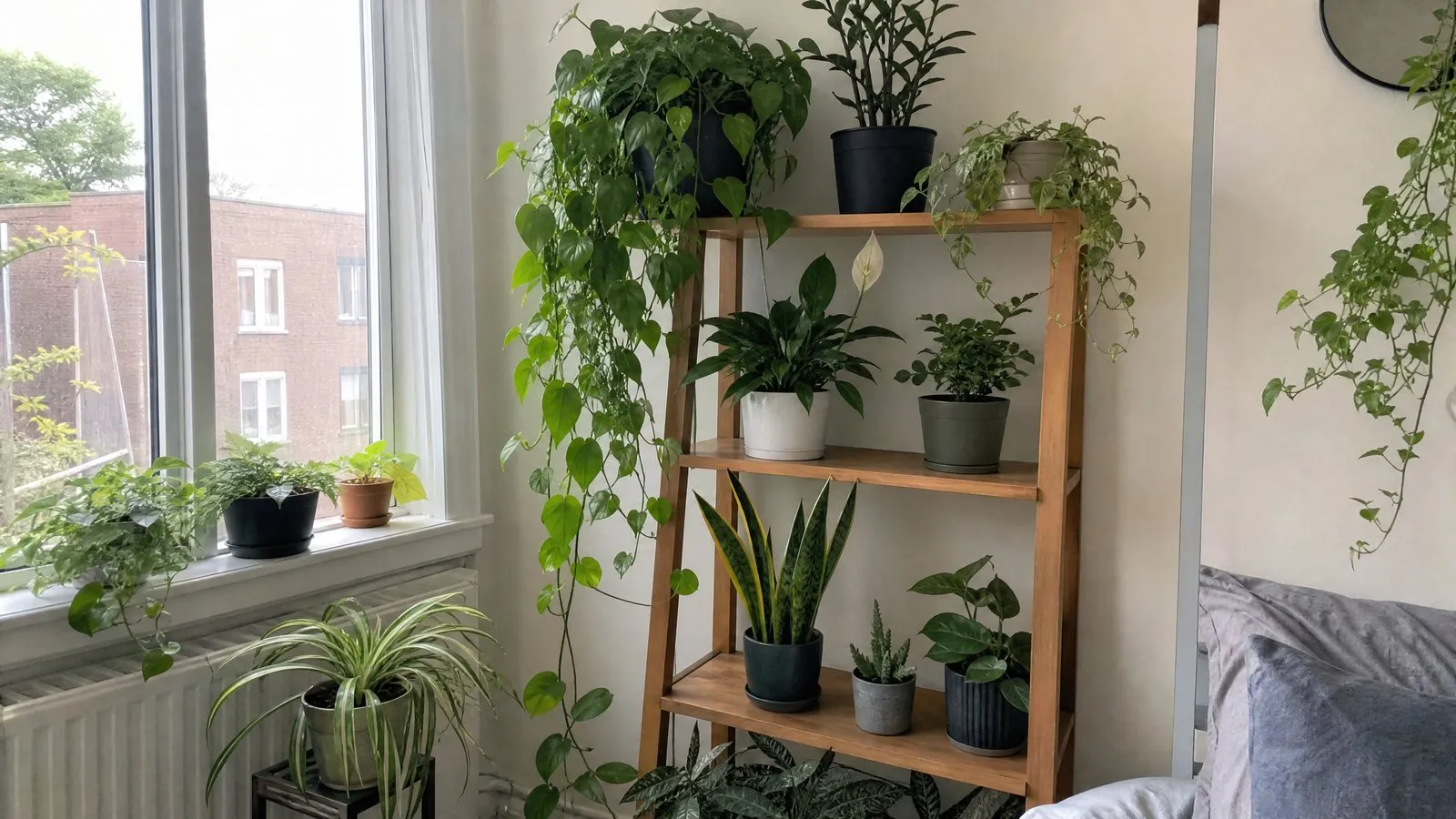
Pothos Care: Light, Watering, Pruning and Propagation
Pothos care made simple: how much light it needs, when to water, why leaves yellow, how to prune leggy vines and propagate cuttings in water step by step.
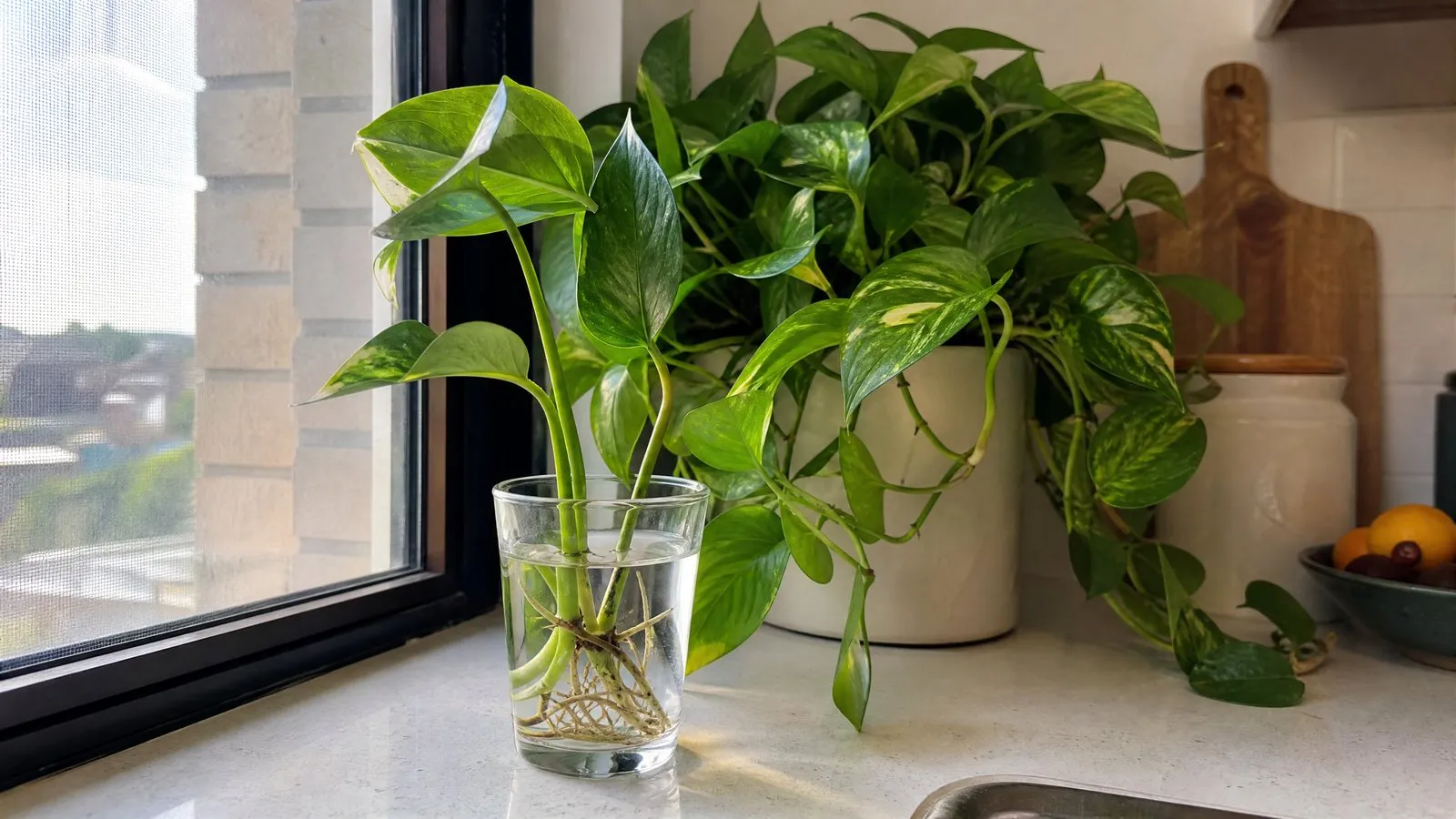
Pothos is one of the most forgiving houseplants you can own. Give it medium, indirect light, water when the top 1–2 inches of soil feel dry (usually every 7–14 days), and it will keep growing. It tolerates low light, skipped waterings, and small pots better than almost anything else, which is why it’s a favorite for first-time plant owners.
If you’ve killed plants before, this is a good one to rebuild your confidence with. Here’s everything you need to keep it healthy, plus how to turn one plant into several for free.
Light: bright is best, but it copes with less
Pothos grows fastest in bright, indirect light: a spot near an east- or north-facing window, or a few feet back from a brighter south or west window. In those conditions you’ll see steady new leaves and tight spacing between them.
It’s famous for tolerating low light, and it genuinely does survive there. But “survive” isn’t “thrive.” In a dim corner, growth slows, new leaves come in smaller, and variegated types fade toward plain green as the plant chases every bit of light it can get.
What pothos does not want is direct midday sun through glass. A few hours of gentle morning sun is fine; harsh afternoon rays will scorch the leaves with pale or brown patches.
A quick rule of thumb:
- Variegated pothos (white or yellow markings) needs more light to keep its pattern. Give it bright, indirect light.
- Plain green pothos handles medium and low light with less complaint.
If your space is genuinely dark, a small grow light makes a big difference. For help reading your own windows, see how much light houseplants need and choosing and using grow lights.
Watering: check the soil, don’t count days
The single best habit with pothos is to water when the top 1–2 inches of soil are dry, not on a fixed schedule. Push a finger in up to the second knuckle. If it’s dry, water thoroughly until it runs out the drainage holes, then empty the saucer. If it still feels damp, wait and check again in a few days.
In practice that lands around every 7–14 days, but it swings with your conditions:
- Bright light + warm room: closer to every 5–9 days.
- Low light + cool room: closer to every 10–18 days.
- Winter, short days: noticeably less often than summer.
Pothos is a drama queen in a useful way: when it’s thirsty, the leaves and stems go soft and droopy, then perk back up within hours of watering. That’s a handy signal, though you shouldn’t let it wilt hard every time, since repeated severe wilting stresses the plant.
Pothos handles underwatering far better than overwatering. Soggy soil that never dries is the fastest way to rot the roots. When in doubt, wait a day. For the full method, read how often to water houseplants, and if you’re unsure which way you’re erring, overwatering vs underwatering breaks down the signs. You can also map out a routine with our free Watering Planner.
Pot and soil
Always use a pot with drainage holes. Pothos is happy in a standard, well-draining houseplant mix, and it doesn’t mind being a little snug in its pot. Repot up one size (about 1–2 inches wider) when roots start circling the bottom or poking out the holes, roughly every 1–2 years.
More on getting these right: how to choose the right pot, potting soil for houseplants, and how to repot without killing it.
Why your pothos has yellow leaves
An occasional yellow leaf, especially an old one near the base, is normal. A wave of them means something’s off. Here are the usual causes, from most to least common.
| Cause | What you’ll see | Fix |
|---|---|---|
| Overwatering | Several yellow leaves, soil stays wet, maybe mushy stems or a musty smell | Let soil dry more between waterings; check drainage; repot if roots are rotting |
| Underwatering | Yellowing with crispy edges, dry soil pulling from the pot, limp vines | Water thoroughly and shorten the gap between waterings |
| Too little light | Slow growth, pale new leaves, leggy stems | Move to brighter indirect light or add a grow light |
| Natural aging | One or two old leaves low on the vine | Nothing needed; trim them off |
| Nutrient shortage | Overall pale, slow growth after a year or more in the same soil | Feed in spring/summer and refresh soil |
Overwatering and underwatering can look alike, which is why checking the soil matters more than the leaf color alone. For a deeper diagnosis, see 8 causes of yellow leaves and why plants droop.
Feeding
Pothos isn’t a heavy feeder. During the growing season (spring and summer), a balanced houseplant fertilizer at half strength every 4–6 weeks is plenty. Skip feeding in fall and winter when growth naturally slows. Our guide on how and when to fertilize covers the details.
Humidity and temperature
Pothos is comfortable in normal home conditions: roughly 65–85°F (18–29°C). Keep it away from cold drafts and don’t let it sit below about 50°F (10°C).
It tolerates average household humidity just fine, so you don’t need to fuss. If your air is very dry and leaf edges look crisp, grouping plants together helps a little; our honest take on raising humidity explains what actually works.
Pruning a leggy pothos
Over time, pothos vines stretch out with long gaps between leaves, especially if light is low. Pruning fixes this and makes the plant fuller, because cutting a stem encourages it to branch.
Here’s how:
- Find a node. A node is the small bump on the stem where a leaf meets the vine, often with a tiny root nub. New growth comes from here.
- Cut about ¼ inch above a node using clean scissors or shears. Cutting just above a node tells the plant to push out new growth from that point.
- Prune the longest, barest vines first. Remove up to about a third of the plant at one time so you don’t shock it.
- Save the cuttings. Don’t bin them, they’re free new plants (see below).
- Tuck cuttings back in if you like. You can root fresh cuttings right into the same pot to make the plant bushier at the base.
The best time to prune is spring or summer, when the plant recovers fastest, but a light tidy-up is fine any time of year.
Propagating pothos in water, step by step
Water propagation is almost foolproof with pothos, and it’s a great way to make more plants or share them. Each cutting needs at least one node, since that’s where roots form.
You’ll need: clean scissors, a glass or jar, and room-temperature water.
- Take a cutting with 1–2 leaves and at least one node. A good length is 4–6 inches. Cut about ¼ inch below a node.
- Remove the lowest leaf so that at least one bare node will sit underwater. A leaf sitting in water will rot.
- Put the cutting in the jar with the node (or nodes) submerged and the leaves above the waterline.
- Set it in bright, indirect light. Avoid direct sun, which encourages algae and can cook the cutting.
- Change the water every 3–5 days, or whenever it looks cloudy, to keep it oxygenated and clean.
- Wait for roots. You’ll usually see small white roots in 1–3 weeks, depending on warmth and light.
- Pot it up once roots are about 1–2 inches long. Plant into moist, well-draining potting mix and keep the soil a little more consistently damp than usual for the first couple of weeks while the roots adjust to soil.
A few honest notes: water-grown roots are slightly different from soil roots, so some leaf droop after potting is normal while the plant transitions. You can leave pothos growing in water long-term, but it will grow more slowly and need occasional liquid fertilizer at quarter strength, since plain water has no nutrients.
Common pothos varieties
All of these are cared for the same way, with one tweak: the more white or yellow variegation a plant has, the more light it needs to keep it.
- Golden Pothos — The classic. Green leaves splashed with yellow. Tough and vigorous.
- Marble Queen — Heavily streaked with creamy white. Slower growing and needs brighter light to stay variegated.
- Neon — Bright chartreuse, no variegation. Keeps its glow best in good light; goes duller in shade.
- Jade — Solid deep green. The most tolerant of low light.
- Pearls and Jade — Smaller leaves with white and gray-green edges. Compact and slow.
- Marble/Snow Queen types — Very white, very slow, the fussiest about light of the group.
A quick note on names: the plant sold as “satin pothos” or “silver pothos” (Scindapsus) is a close cousin, not a true pothos (Epipremnum aureum), but care is nearly identical.
If you’re building a low-effort collection, pothos sits comfortably alongside the other picks in the 12 easiest houseplants for beginners, like snake plants and spider plants.
Is pothos toxic to pets?
Yes. Pothos is toxic to cats and dogs, and it’s on the ASPCA’s list of plants toxic to pets. It contains insoluble calcium oxalate crystals, which can cause mouth and throat irritation, drooling, vomiting, and difficulty swallowing if a pet chews the leaves. It’s also irritating to people, especially children, if ingested.
Keep it well out of reach of curious pets and kids, for example on a high shelf or in a hanging planter. If you think your pet has chewed pothos, call your vet or an animal poison control line. For people, in the US you can contact Poison Control; in the UK, call NHS 111.
If you want a pet-safe setup instead, see houseplants safe for cats and dogs.
Common pests
Pothos is fairly pest-resistant, but it can still pick up the usual houseplant bugs, especially on stressed plants. Watch for:
- Mealybugs — white cottony clusters in leaf joints. See how to get rid of mealybugs.
- Spider mites — fine webbing and stippled leaves, usually in dry conditions. See spider mites on houseplants.
- Fungus gnats — tiny flies from soil kept too wet; a sign to let the top dry out more. See getting rid of fungus gnats.
Wiping the leaves occasionally keeps them clean and makes early pests easier to spot.
New to all this? Our houseplant care for beginners guide covers the five things that matter most, and pothos is a perfect plant to practice them on.
FAQ
How often should I water pothos?
Check the soil rather than counting days. Water when the top 1–2 inches feel dry, which usually works out to every 7–14 days. Expect to water more often in bright, warm conditions and less often in low light or winter.
Why is my pothos leggy with few leaves?
Not enough light is the usual cause: the vine stretches toward the window and spaces its leaves far apart. Move it to brighter indirect light and prune the long bare vines just above a node to encourage bushier regrowth.
Can pothos grow permanently in water?
Yes, pothos can live in water long-term. It grows more slowly than in soil and needs a weak dose of liquid fertilizer every few weeks, since water alone has no nutrients. Change the water regularly to keep it fresh.
Is pothos safe for cats and dogs?
No. Pothos is toxic to cats and dogs and appears on the ASPCA’s toxic plant list. Chewing it can cause mouth irritation, drooling, and vomiting. Keep it out of reach and call your vet if your pet ingests any.
How long do pothos cuttings take to root in water?
Most cuttings show small white roots within 1–3 weeks in bright, indirect light at normal room temperature. Wait until roots are about 1–2 inches long before potting them into soil.