How Much Light Do Houseplants Need? Bright, Medium and Low Light Explained
Learn what bright, medium and low light really mean, how window direction and distance change it, and simple ways to measure the light in your home.
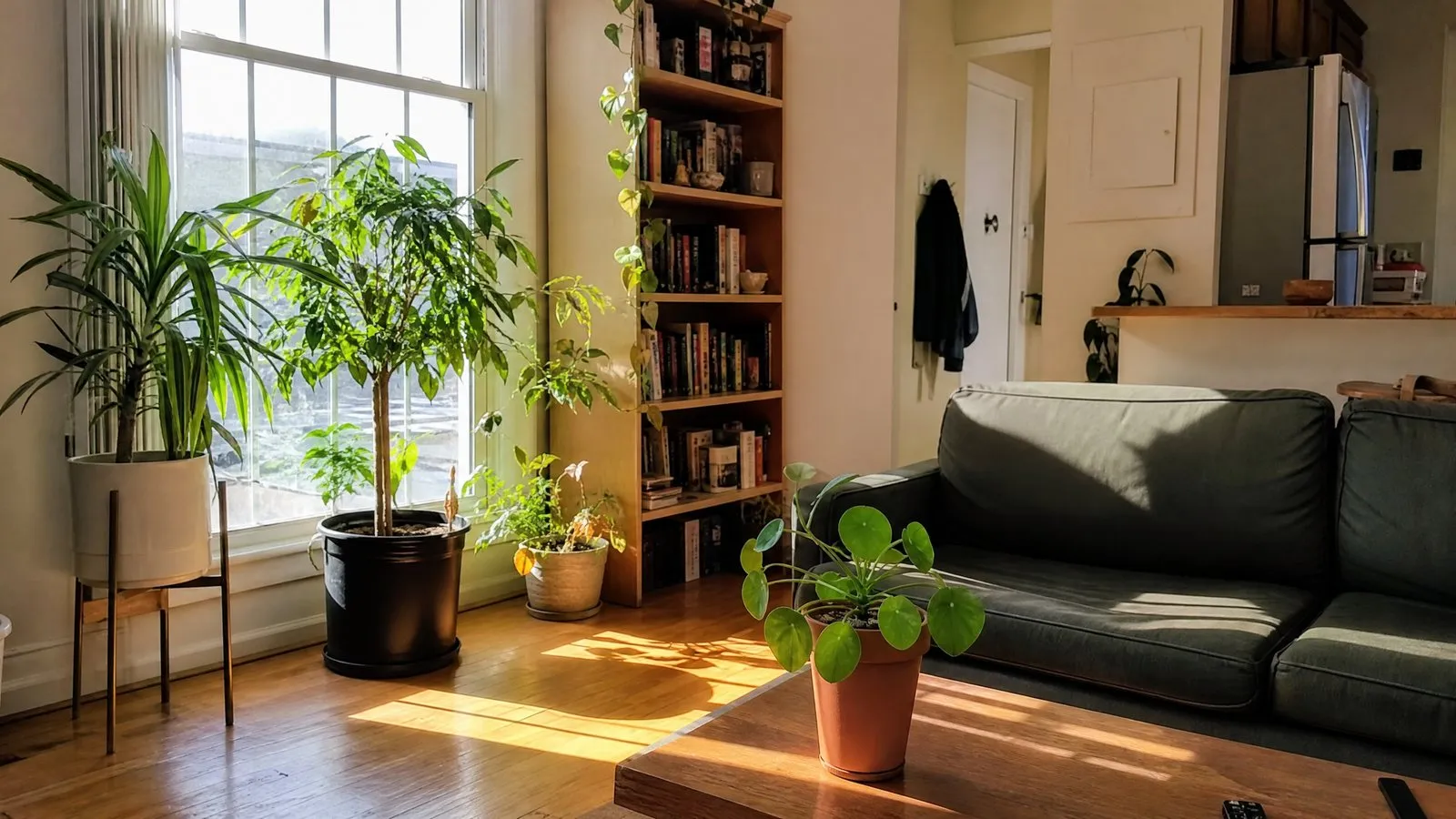
Most houseplants want bright, indirect light: a spot that feels clearly bright, where sun lands nearby but not directly on the leaves for hours. Medium light is a step back from that, still bright enough to cast a soft shadow. Low light is a dim corner where you’d want a lamp on to read. The single biggest thing you can do for a struggling plant is move it closer to a window.
Light is the fuel plants run on. Water, soil and fertilizer only matter once a plant has enough light to use them. Get light roughly right and everything else gets easier. Here’s how to read the light you actually have, today.
What “bright,” “medium” and “low” light really mean
These labels describe how much usable light reaches the plant, not whether a room “feels” bright to you. Human eyes adjust quickly, so a room that looks fine to us is often much darker than a plant needs.
Here’s a practical way to think about each level.
| Light level | What it looks like | Shadow test result | Typical spot |
|---|---|---|---|
| Direct sun | Sun hits the leaves directly for hours | Hard, sharp shadow | On a sunny windowsill |
| Bright indirect | Very bright, sun lands close but not on the plant | Crisp shadow with slightly soft edges | Within 1–3 ft of a bright window |
| Medium | Clearly lit, no direct sun | Soft, fuzzy shadow | 4–7 ft from a bright window, or beside a dimmer one |
| Low | Dim, you’d turn on a lamp to read | Faint or no visible shadow | A corner, a hallway, far from any window |
A few honest notes. “Bright indirect” is the most common recommendation on plant tags, and it covers a wide range. Most foliage plants are happy anywhere in that band. “Low light” does not mean no light, and it doesn’t mean a plant thrives there, only that it can survive. Even a snake plant grows faster and stronger with more light.
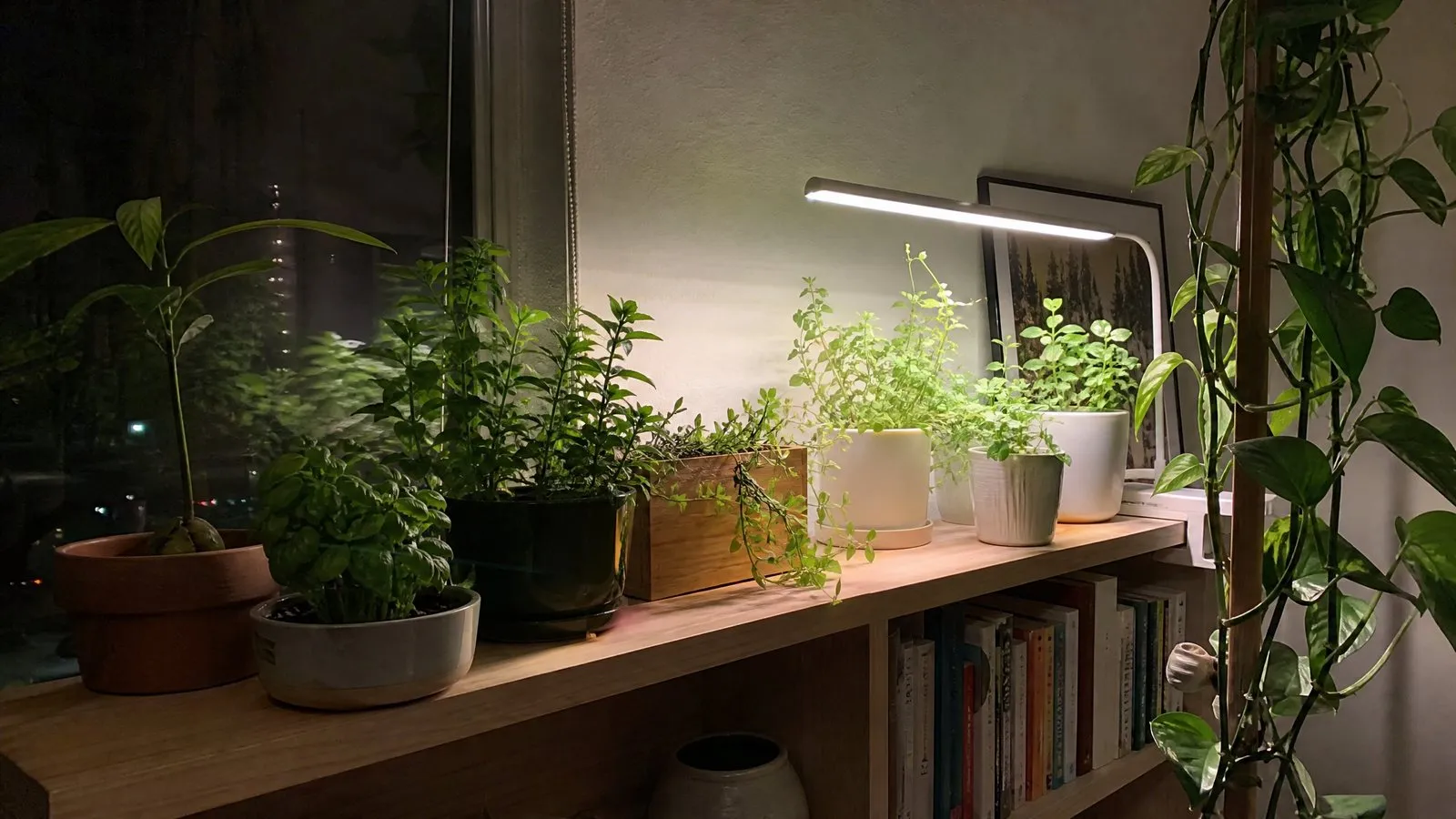
A handful of plants genuinely want direct sun: most herbs, and edibles like lettuce and basil. For those, aim for the brightest windowsill you have, and expect to add a grow light in winter.
How window direction changes everything
The direction your window faces is the biggest factor in how much light a spot gets. This is for the Northern Hemisphere (US, UK, Canada). In Australia and the Southern Hemisphere, flip north and south: a north-facing window is your bright, sunny one, and south-facing is the dim one.
South-facing (north-facing in Australia)
The brightest light you can get indoors, with direct sun for much of the day. Great for herbs, succulents, cacti and sun-lovers right on the sill. Foliage plants like pothos and monstera do well a few feet back, or behind a sheer curtain, so the midday sun doesn’t scorch them.
East-facing
Gentle direct morning sun, then bright indirect light the rest of the day. This is a forgiving, friendly exposure for most houseplants. Peace lilies, spider plants and ferns do nicely here.
West-facing
Bright indirect light in the morning, then strong, hot direct sun in the afternoon. Similar intensity to east, but the afternoon sun is harsher and warmer, so leaves can scorch on the sill. Pull tender plants back a foot or two.
North-facing (south-facing in Australia)
The dimmest exposure, with no direct sun and steady, cool light all day. This is true medium-to-low light territory. Stick to tolerant plants like snake plants, ZZ plants, pothos and peace lilies, and keep them right at the window, not across the room.
Things that cut your light no matter the direction: a building, tree or balcony above blocking the view of the sky, deep window recesses, permanently closed blinds, and dirty glass. Wipe your windows a couple of times a year; grime alone can noticeably dim a sill.
Distance from the window matters more than people think
Light falls off fast as you move away from the glass. A plant on the windowsill and the same plant 8 feet away are living in completely different worlds, even in the same room.
As a rough guide for a bright window:
- 0–1 ft (on the sill): brightest, often some direct sun
- 2–3 ft: bright indirect, the sweet spot for most foliage plants
- 4–7 ft: medium light; growth slows, choose tolerant plants
- 8+ ft or around a corner: low light; most plants decline here over time
So “I keep it by the window” and “I keep it in the living room, which has a big window” are not the same sentence. If a plant is struggling, the first and cheapest fix is almost always to move it a few feet closer to the glass.
Simple ways to measure the light you have
You don’t need gear. Two methods cost nothing, and a third costs a few dollars.
1. The shadow test
On a bright day around midday, hold your hand about a foot above a sheet of white paper where the plant sits.
- Sharp, crisp shadow: direct or very bright light
- Soft shadow with fuzzy edges: bright indirect to medium
- Faint, barely-there shadow: low light
- No shadow at all: too dark for most plants
Do this check at the plant’s actual spot and height, not at the window, since that’s what the plant experiences.
2. A phone light meter app
Free light meter apps use your phone’s camera sensor to estimate brightness in lux or foot-candles. They aren’t lab-accurate, but they’re great for comparing two spots in your home. Point the phone toward the light the way the plant faces, in the middle of the day.
Rough targets many growers use:
- Low light: around 50–250 foot-candles (about 500–2,500 lux)
- Medium light: around 250–1,000 foot-candles (about 2,500–10,000 lux)
- Bright indirect: around 1,000–2,000 foot-candles (about 10,000–20,000 lux)
- Direct sun: 2,000+ foot-candles and well up from there
Treat these as ballpark figures for comparing spots, not hard rules.
3. Watch where the sun actually lands
Spend a day noticing when and where a patch of sun crosses your floor or wall. A spot that gets 2–4 hours of direct sun plus bright light the rest of the day is excellent for sun-lovers. A spot that never sees a direct beam is medium at best.
Remember light changes with the seasons. A winter windowsill can get far less light than the same sill in summer, especially at higher latitudes in the UK and Canada. Many plants that cruise through summer need to move closer to the window, or get a grow light, from roughly November to February.
Signs your plant isn’t getting the right light
Plants tell you when the light is off. The trick is reading the signals early.
Too little light
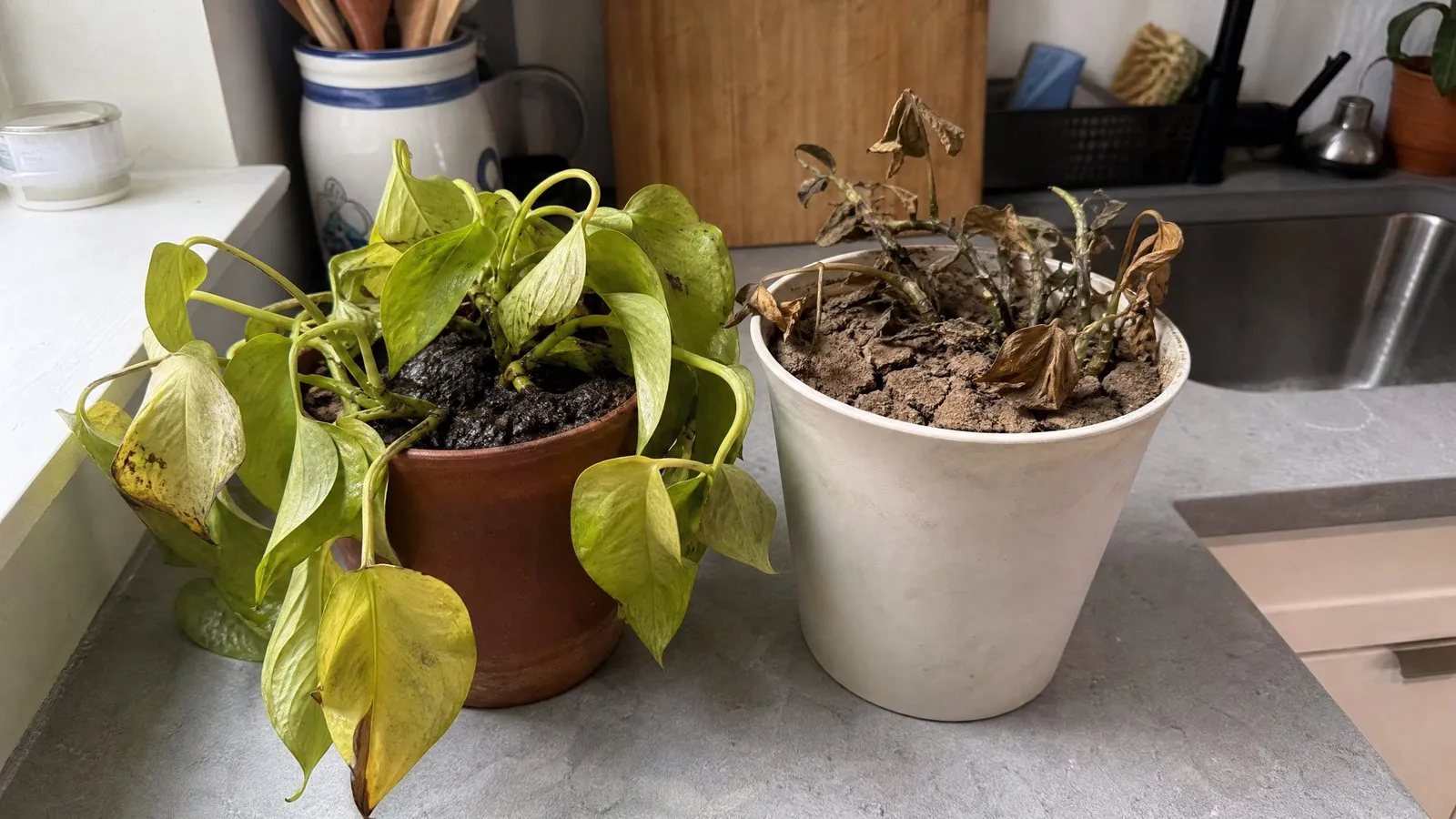
- Leggy, stretched growth with long gaps between leaves, leaning hard toward the window
- Small new leaves that are paler than the older ones
- Little or no new growth over many weeks
- Variegated plants losing their pattern and turning plain green to grab more light
- Soil staying wet for a very long time, because a plant in low light drinks slowly (this is a classic cause of root rot, covered in overwatering vs underwatering)
- Few or no flowers on plants like peace lilies
Too much light
- Scorched patches: pale, bleached, crispy or brown spots, often where direct sun hits
- Washed-out, yellowing leaves across the whole plant
- Dry, crispy leaf edges and faster-than-normal wilting
- Soil drying out very quickly
If you see scorching, move the plant back from the glass or add a sheer curtain. If you see stretching and pale growth, move it closer to the window. Make changes gradually over a week or two, because a sudden jump from a dim corner to a hot sill can shock the plant and cause its own burn.
Not sure yellow leaves are a light problem? Our guide on why plant leaves turn yellow walks through the other common causes.
Matching common plants to your light
A quick reality check on popular beginner plants. For more options, see the 12 easiest houseplants for beginners.
| Plant | Happiest in | Tolerates |
|---|---|---|
| Snake plant | Bright indirect | Low light (grows slowly) |
| Pothos | Bright indirect | Medium to low |
| ZZ plant | Bright indirect | Low light |
| Peace lily | Medium to bright indirect | Low (won’t flower) |
| Spider plant | Bright indirect | Medium |
| Monstera | Bright indirect | Medium (fewer splits) |
| Herbs & basil | Direct sun, 6+ hrs | Nothing less, really |
Notice the pattern: almost everything is “happiest in bright indirect.” When in doubt, that’s the spot to aim for. For herbs and other edibles, a south or west sill is the minimum, and most indoor growers in the UK and Canada will want a grow light for them in winter.
When to add a grow light
If your brightest window still isn’t enough, especially in winter or in a north-facing apartment, a grow light is a genuine fix rather than a gimmick. It’s often the difference between a basil plant that survives and one that actually produces. We cover types, brightness and timers in how to choose and use grow lights.
A simple starting point: run a grow light for about 10–14 hours a day, positioned close enough to be effective (often within 6–12 inches for small LED panels, but follow the light’s own guidance). A plug-in timer takes the guesswork out.
Put it together today
- Figure out which way your windows face, and remember to flip north/south if you’re in Australia.
- Do the shadow test at each spot where you want a plant.
- Match the plant to the light, not the other way around.
- If a plant looks leggy and pale, move it 2–3 feet closer to the window this week.
- If it’s scorching, pull it back or add a sheer curtain.
Light is the foundation. Once you’ve got it right, watering gets much simpler, because a well-lit plant uses water predictably. From there, check the soil instead of the calendar with our guide to how often to water, and see where light fits among the five things that matter most in plant care.
FAQ
Can a plant survive with only artificial room lighting?
Usually not well. Normal ceiling and lamp bulbs are far too dim for most plants, even if the room looks bright to you. A few of the toughest plants, like ZZ plants and snake plants, can hang on in a well-lit office, but they won’t thrive. If there’s no usable window light, add a dedicated grow light.
How far from a window is “too far”?
For most foliage plants, beyond about 6–8 feet from a bright window the light drops into low-light territory and growth stalls. Tolerant plants like pothos and snake plants can survive there, but they’ll grow faster and look better within 2–3 feet of the glass.
Is direct sunlight always bad for houseplants?
No. Sun-lovers like herbs, cacti and succulents need several hours of direct sun. The problem is putting shade-adapted jungle plants, like calatheas or many ferns, in hot direct sun, which scorches their leaves. Match the plant to the exposure, and use a sheer curtain to soften a harsh south or west window.
Why does my variegated plant keep turning plain green?
That’s a classic sign of too little light. Variegated leaves have less chlorophyll, so in dim spots the plant produces greener leaves to capture more light. Move it closer to a bright window, out of direct midday sun, and new growth should hold more of its pattern.
Do light meter apps actually work?
They’re good enough for comparing spots in your home, not for precise science. Use one to decide whether the windowsill or the shelf across the room gets more light, rather than trusting the exact number. The free shadow test gives you most of the same information.