How Often Should You Water Houseplants? (Stop Using a Calendar)
Stop watering on a fixed schedule. Learn the finger test, the pot-lift trick, and watering ranges by plant type so your houseplants thrive.
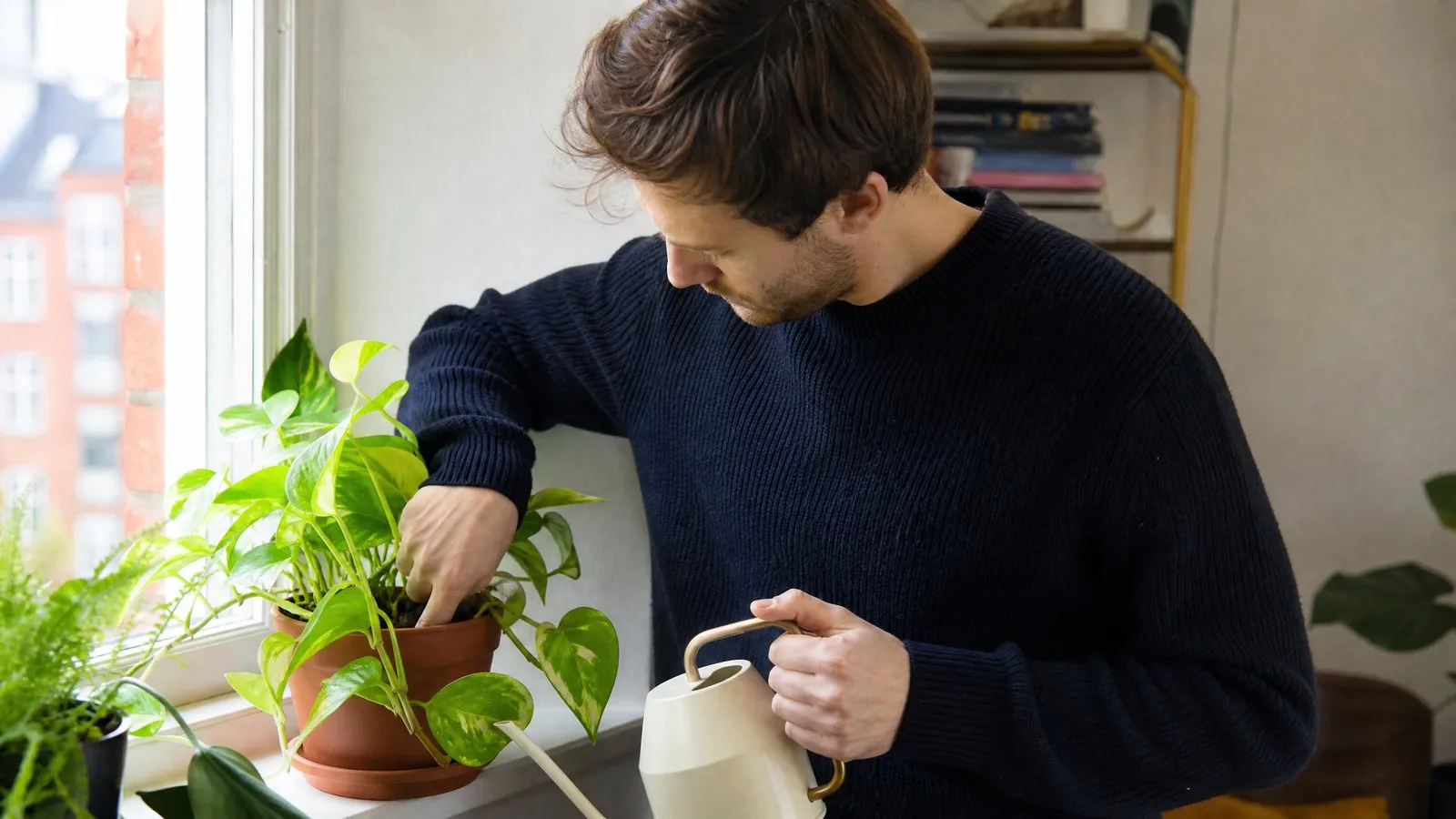
The honest answer: there’s no magic number. Most houseplants want water when the top 1 to 2 inches of soil have dried out, which might be every 7 to 10 days for a leafy tropical, or every 2 to 4 weeks for a succulent. Check the soil before you water, not the calendar.
If you’ve killed plants by sticking to “water every Sunday,” this is almost certainly why. Let’s fix it.
Why fixed schedules fail
A calendar can’t see your plant or your home. How fast soil dries depends on a long list of things that change week to week:
- Light. A plant in a bright window drinks far faster than the same plant in a dim corner.
- Temperature and humidity. Warm, dry air (hello, winter heating) pulls moisture out quickly. Cool, humid rooms hold it.
- Pot size and material. Terracotta breathes and dries fast. Plastic and glazed ceramic stay wet longer. A big pot of soil around a small plant stays soggy for ages.
- Season. Most plants grow in spring and summer and slow down in fall and winter, so they need less water in the cooler months.
- The plant itself. A thirsty fern and a drought-loving cactus have completely opposite needs.
Here’s the trap: a schedule often “works” for a few weeks, then the seasons shift or you move the plant, and suddenly you’re drowning it or leaving it parched. Overwatering is the single most common way beginners lose houseplants, usually because the schedule kept going when the plant’s needs changed.
So the rule isn’t how often. It’s how to check.
The finger test (your most reliable tool)
This takes five seconds and costs nothing.
- Push your index finger into the soil up to the first or second knuckle (that’s roughly 1 to 2 inches).
- Feel the soil. If it’s dry at that depth, it’s time to water most plants.
- If it’s still cool and damp, wait and check again in a day or two.
For most leafy houseplants, dry in the top 1 to 2 inches means water. For succulents and cacti, let it go further, closer to fully dry through the pot. For moisture-loving ferns, water when just the very top feels dry, before it dries deeper.
If sticking your finger in soil isn’t for you, a wooden chopstick or skewer works like a dipstick. Push it in, wait a minute, pull it out. Soil clinging to it and a darker, damp look means there’s moisture down there. Comes out clean and dry? Time to water.
A few notes on cheap moisture meters: the probe-style ones can be inconsistent and some react to minerals in the soil rather than true moisture. Your finger is more trustworthy than most of them.
Lift the pot to judge weight
This is the trick experienced plant people rely on, and it’s worth learning early.
Water is heavy. A freshly watered pot feels noticeably heavier than a dry one. After you water thoroughly, pick up the pot and feel its weight. Do it again a few days later. Over a week or two you’ll build a feel for “just watered” versus “ready for more” without touching the soil at all.
This is especially handy for:
- Plants in dense foliage where you can’t easily reach the soil.
- Succulents and snake plants, where you want the mix nearly bone-dry and weight tells you fast.
- Hanging plants you can lift down and heft.
Pair the lift with the finger test for the first month, and soon the lift alone will tell you most of what you need.
Typical watering ranges by plant group
These are starting points, not laws. Your light, pot, and season will push them around, so always confirm with the finger test. Ranges below assume a pot with a drainage hole in average indoor conditions.
| Plant group | Examples | Let soil dry | Rough spring/summer range | Rough fall/winter range |
|---|---|---|---|---|
| Succulents & cacti | Jade, echeveria, most cacti | Nearly all the way through | Every 10–21 days | Every 3–6 weeks |
| Semi-drought tolerant | Snake plant, ZZ plant, pothos | Top 2 inches, often deeper | Every 7–14 days | Every 2–4 weeks |
| Tropical foliage | Monstera, philodendron, spider plant, peace lily | Top 1–2 inches | Every 7–10 days | Every 10–14 days |
| Thirsty / moisture-loving | Ferns, calatheas, baby’s tears | Only the very top | Every 3–7 days | Every 5–10 days |
A few plant-specific guides go deeper if you want them: snake plant, which is genuinely easy to overwater; pothos; monstera; spider plant; and the peace lily, which will dramatically droop to tell you it’s thirsty.
The single biggest variable not in this table is light. A pothos in a bright spot might need water twice as often as one in low light. If you’re not sure how bright your spot is, see how much light houseplants need.
Season changes everything
Most houseplants slow their growth as days get shorter and cooler, usually from mid-fall through late winter in the US, UK, Canada, and Australia (flipped for the Southern Hemisphere). When growth slows, water use drops, sometimes by half.
What to do:
- Fall and winter: Check more by feel, water less often. A plant you watered weekly in July might go 2 to 3 weeks in January. Keep checking rather than assuming.
- Spring: As new growth appears and light returns, plants drink more. Ramp watering back up gradually.
- Summer: Peak demand. Hot spells and open windows can dry pots fast. Check twice as often during heat waves.
Indoor heating in winter is a curveball: the air gets dry even as the plant needs less water, so soil can dry quickly while the plant isn’t actively using much of it. Check the soil rather than guessing, and if your dry air is bothering humidity-lovers, here’s what actually helps with humidity.
How to water thoroughly
When it is time to water, do it properly. Shallow splashes train roots to stay near the surface and leave the lower rootball dry.
- Water slowly at the soil surface until water runs out the drainage hole. This wets the entire rootball, not just the top.
- Let it drain fully for a few minutes.
- Empty the saucer or cachepot. This is the step most people skip, and it matters most.
That last point deserves emphasis: never let a pot sit in standing water. Roots left in a waterlogged saucer suffocate and rot. If you use a decorative outer pot with no hole (a cachepot), check it after watering and tip out any pooled water.
If water rushes straight through and the soil barely seems to wet, the mix may have dried into a hard, water-repellent lump. In that case, bottom water instead: set the pot in a few inches of water for 20 to 30 minutes so the soil soaks it up from below, then drain. Here’s a full guide to bottom watering and when it helps.
Does water type matter?
For most plants, room-temperature tap water is fine. Cold water straight from the tap can shock roots, so let it sit or mix in a little warm. A few sensitive plants (notably some calatheas and prayer plants) can show brown leaf tips from fluoride or hard water; if that’s you, filtered or rainwater can help. For the majority of beginner-friendly plants, don’t overthink it.
When it drains too fast or too slow
Watering problems are often really pot and soil problems.
- Dries out in a day or two, every time? The plant may be rootbound (roots have filled the pot), or the pot is too small, or it’s a thirsty plant in intense light. It may be time to repot.
- Stays wet for weeks and never seems to dry? The pot may be too big, lack drainage, or the soil may be too dense. The right pot choice and the right potting mix fix most of this. Always use a pot with a drainage hole.
If your leaves are turning yellow or your plant is drooping and you can’t tell which way you’ve erred, two guides will save you: overwatering vs underwatering and why leaves turn yellow. Constantly soggy soil also invites fungus gnats, so if you’re seeing tiny flies, you’re probably watering too often.
Build your own routine
Put it together and the system is simple:
- Group plants by need (thirsty, moderate, drought-tolerant) so you can check similar ones together.
- Check, don’t assume. Once or twice a week, run your finger or a chopstick into the soil of each group.
- Water thoroughly only the ones that are ready, and empty every saucer.
- Adjust by season. Expect less in winter, more in summer.
For a personalized nudge, our free Watering Planner estimates check-in reminders based on your plant type, pot, and light, so you’re reminded to check rather than to blindly water. And if you’re just getting started, the broader picture is in houseplant care for beginners.
Watering well is a habit of paying attention, not a number on a calendar. Get in the habit of checking, and your plants will tell you what they need.
FAQ
How do I know if I’m overwatering or underwatering?
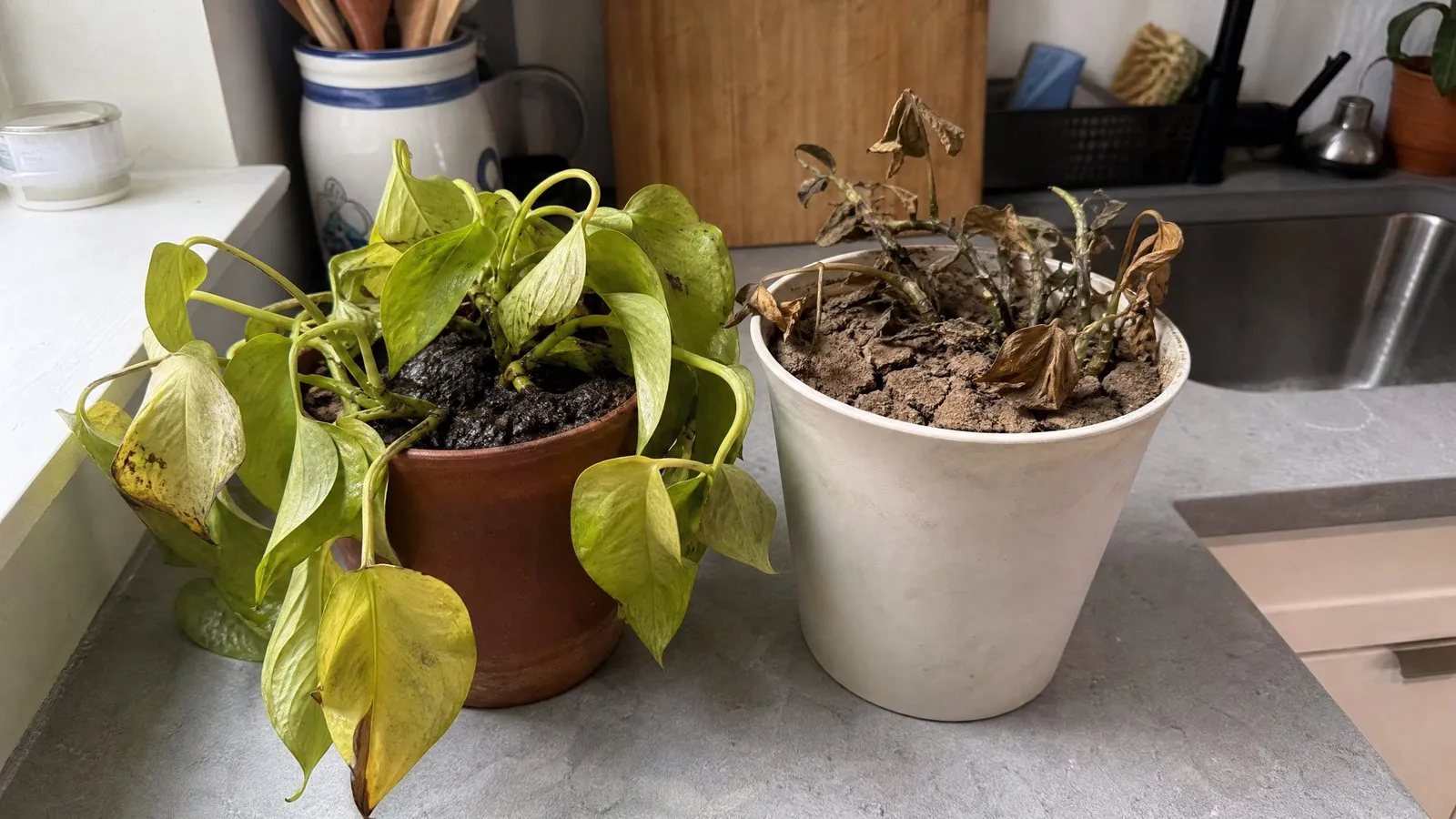
Both can cause yellow leaves and drooping, which is confusing. Overwatered soil stays wet, feels soggy, and may smell sour; leaves often turn soft and yellow. Underwatered soil is bone-dry and pulls away from the pot edge; leaves go crispy and brown. Check the soil moisture first, then see our guide on telling them apart.
Should I water on a set day each week?
Use a set day to check, not to automatically water. Picking a regular check-in day (say, every Saturday) is a great habit. Just let the soil decide whether you actually pour water that day.
Is it better to water from the top or the bottom?
Top watering is fine for most plants and flushes salts through the soil. Bottom watering helps when soil has dried into a hard lump, for plants that hate wet leaves, or to discourage fungus gnats. Either way, let excess drain and don’t leave the pot sitting in water.
How often should I water succulents and snake plants?
Let their soil dry out almost completely. In spring and summer that’s often every 10 to 21 days; in winter it can stretch to 3 to 6 weeks. When in doubt, wait. These plants handle a missed watering far better than a soggy pot.
Does misting count as watering?
No. Misting briefly raises humidity around the leaves but doesn’t wet the soil where roots drink. If your plant needs more moisture in the air, misting is a weak tool anyway, see what actually raises humidity. Water the soil when it’s dry.