Why Are My Plant's Leaves Turning Yellow? 8 Causes and Fixes
Yellow leaves usually mean watering trouble, low light, or old age. Use our diagnostic table and soil checks to find the real cause and fix it today.
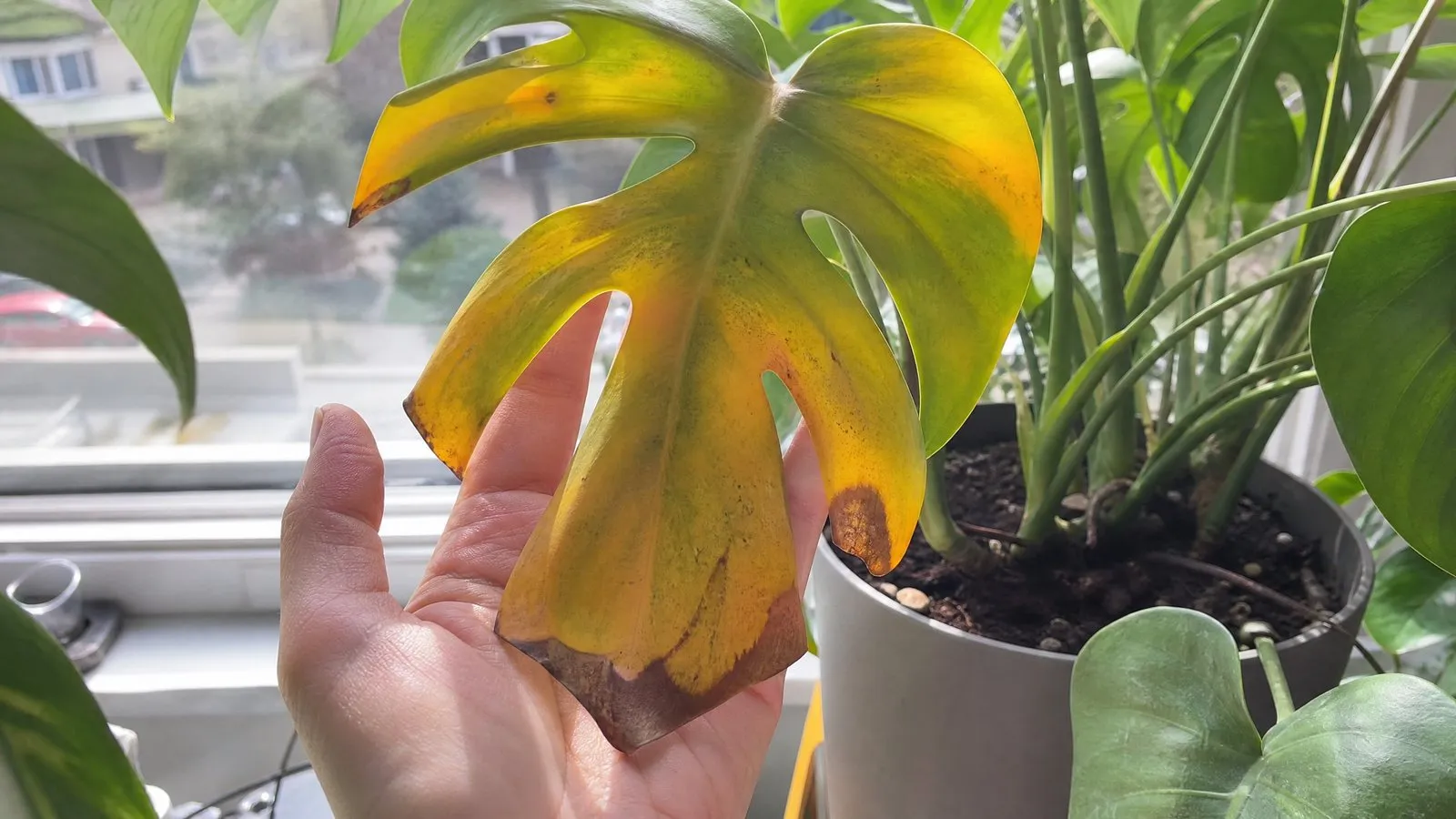
Yellow leaves almost always come down to one of eight things: overwatering, underwatering, low light, normal old-leaf drop, a nutrient shortage, a root-bound pot, pests, or cold drafts. The fastest way to tell them apart is to notice which leaves are yellowing and what the soil feels like when you push a finger two inches in.
Start there, and you can usually diagnose the problem in about five minutes. Here’s how to read the clues and what to do about each cause.
First, do these two 60-second checks
Before you change anything, gather two pieces of information. They rule out most causes on their own.
1. Feel the soil. Push a finger in to the second knuckle, about 2 inches deep. Is it soggy and cold, evenly damp, or bone dry and pulling away from the pot? If you can’t reach, a wooden chopstick or skewer works: pull it out and see if soil clings wet, cool, or dry.
2. Look at which leaves are yellow. This matters more than people expect:
- Bottom or oldest leaves (lowest on the plant, oldest growth): points toward overwatering, natural aging, or a nitrogen shortage.
- New growth at the top or tips: points toward a micronutrient issue, root problems, or very low light.
- Scattered, random leaves with spots or speckling: points toward pests.
- Leaves nearest a window or door in winter: points toward cold drafts.
Keep those two answers in mind as you read the table.
The quick diagnostic table
| Cause | Which leaves yellow | Soil feels | Other giveaways |
|---|---|---|---|
| Overwatering | Lower/older first, often soft and mushy | Soggy, stays wet for days | Musty smell, fungus gnats, mushy stem base |
| Underwatering | Lower leaves, dry and crispy | Bone dry, pulls from pot sides | Drooping, light pot, soil repels water |
| Low light | Lower and inner leaves drop | Stays wet a long time | Leggy stems, small new leaves, leaning to window |
| Natural aging | One or two oldest bottom leaves | Normal | Rest of plant looks healthy |
| Nutrient deficiency | Older leaves (nitrogen) or new leaves (iron) | Normal | Pale or yellow-between-green-veins; no repot in 1+ year |
| Root bound | Overall yellowing, new leaves small | Dries out very fast | Roots circling or out the drainage hole |
| Pests | Random, speckled or stippled | Normal | Webbing, white fuzz, tiny moving dots |
| Cold drafts | Leaves near a window or vent | Normal | Sudden; follows a cold snap or AC blast |
Now the detail on each one, with fixes.
1. Overwatering (the most common cause)
If the soil is soggy and the yellow leaves feel soft or limp, this is your likeliest culprit. Overwatered roots can’t breathe, so they start to rot and stop delivering water to the plant, which is why an overwatered plant can look oddly similar to a thirsty one.
Watch for a musty smell, a cloud of fungus gnats, or a stem base that feels mushy.
The fix:
- Stop watering and let the top 2 inches dry out fully before the next drink.
- Make sure the pot has drainage holes and empty any saucer 15 minutes after watering. Never let a pot sit in standing water.
- If it smells rotten or the stem is soft, slide the plant out and check the roots. Healthy roots are firm and white or tan; rotten roots are brown, soft, and stringy. Trim the mushy ones with clean scissors and repot into fresh, well-draining mix.
The real long-term fix is to water by checking the soil, not the calendar. Our guide on how often to water houseplants walks through it, and if you’re not sure which way you’ve gone wrong, overwatering vs underwatering lays out the differences side by side.
2. Underwatering
If the soil is bone dry, the pot feels surprisingly light, and the yellow leaves are crispy rather than mushy, the plant is thirsty. Lower leaves usually yellow and dry first as the plant sacrifices them.
A telltale sign: water runs straight through and out the bottom without soaking in. That means the soil has gone hydrophobic and shrunk away from the sides.
The fix:
- Water thoroughly until it drains from the bottom. If the soil is repelling water, bottom-water instead: set the pot in a few inches of water for 20 to 30 minutes so it soaks up from below. Here’s how bottom watering works.
- Going forward, water when the top 1 to 2 inches are dry for most leafy plants. Drought-tolerant plants like snake plants can dry out further.
- Heading away for a while? Our notes on watering plants while on vacation can help.
3. Low light
Plants in too little light often drop their lower and inner leaves first, turning them yellow as they go. You’ll also see leggy, stretched stems, smaller new leaves, and the whole plant leaning toward the window. Soil that stays wet for a week or more is another clue, since a plant in dim light uses water slowly.
The fix:
- Move the plant closer to a window. A spot within 2 to 3 feet of a bright east or west window suits most houseplants.
- If your space is genuinely dim, a grow light helps. See how to choose and use grow lights.
- Not sure what “bright” or “medium” light really means? Our guide on how much light houseplants need explains it in plain terms.
4. Natural old-leaf drop
Sometimes a yellow leaf is just a plant being a plant. If one or two of the oldest, lowest leaves turn yellow while everything else looks healthy and new growth keeps coming, there’s nothing wrong.
Plants retire old leaves to put energy into new ones. This is especially normal after a plant settles into a new home or at the end of winter.
The fix: Snip the spent leaf off at the base with clean scissors, or let it drop on its own. No change to care needed.
5. Nutrient deficiency
If your plant hasn’t been repotted or fed in a year or more, it may have exhausted the nutrients in its soil. The pattern tells you which nutrient:
- Nitrogen shortage: older, lower leaves turn uniformly pale then yellow, while new growth stays greener.
- Iron or manganese shortage: newest leaves yellow between the veins while the veins stay green (this is called interveinal chlorosis).
University extension programs, including Penn State Extension, note that nutrient deficiencies in houseplants are usually a sign the potting mix is depleted or the roots can’t take up nutrients properly, often because of overwatering or being root bound.
The fix:
- Feed with a balanced houseplant fertilizer during the active growing season (spring and summer), following the label dilution. More is not better; over-fertilizing can scorch roots and brown leaf edges. Our guide on how and when to fertilize covers amounts and timing.
- If the plant is pot-bound or in old, broken-down soil, refreshing the potting mix often does more than fertilizer. See what potting soil to use.
6. Root bound
A plant that has outgrown its pot can yellow all over, with new leaves coming in small. The classic sign is water that races straight through because roots have filled the pot and there’s barely any soil left to hold moisture. Tip the plant out and look for roots circling the inside or growing out the drainage holes.
The fix:
- Move up one pot size, about 1 to 2 inches wider in diameter. Jumping to a huge pot holds too much wet soil and invites rot.
- Repot into fresh mix in spring if you can. Our step-by-step guide to repotting without killing the plant walks through it, and how to choose the right pot covers size, material, and drainage.
7. Pests
If yellowing shows up as random stippling, speckles, or fine mottling across scattered leaves, check for pests. Look closely, including the undersides of leaves and where leaves meet stems:
- Spider mites: tiny dots and fine webbing; leaves look dusty or faintly speckled. See how to spot and treat spider mites.
- Mealybugs: white cottony fuzz in leaf joints. Here’s how to get rid of mealybugs.
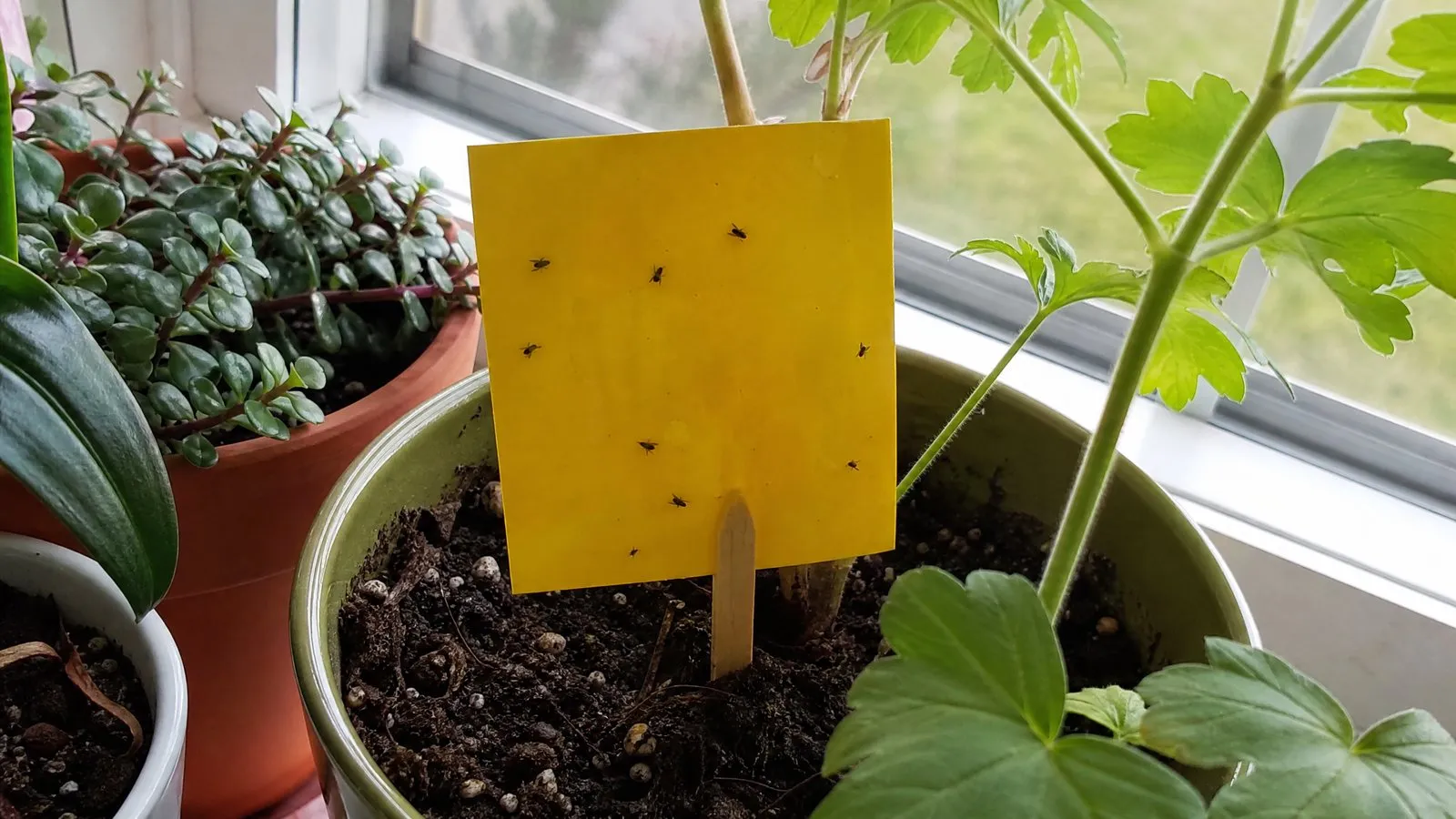
- Fungus gnats: small black flies around the soil; more a sign of soggy soil than a direct leaf threat, but worth fixing. See how to get rid of fungus gnats.
The fix:
- Isolate the plant from your others right away.
- Wipe leaves (tops and undersides) with a damp cloth, then treat with insecticidal soap or a diluted horticultural oil, repeating every 5 to 7 days for a few weeks to catch newly hatched pests.
- Rinse small plants in the shower or sink to knock populations down fast.
8. Cold drafts
If yellowing appears suddenly on leaves nearest a window, an exterior door, or an air-conditioning vent, and it follows a cold snap, drafts are the likely cause. Most tropical houseplants are unhappy below about 50 to 55°F (10 to 13°C), and a blast of cold or hot dry air stresses the leaves closest to it.
The fix:
- Move the plant a foot or two away from drafty windows in winter and away from AC and heating vents year-round.
- Keep leaves from touching cold glass overnight.
- Dry winter air can compound the stress; if leaf edges also brown, our notes on raising humidity may help, though humidity alone rarely causes yellowing.
How to narrow it down fast
Put the two clues together and the cause usually falls out:
- Soggy soil + soft yellow lower leaves → overwatering.
- Bone-dry soil + crispy yellow lower leaves → underwatering.
- Soil wet for a week + leggy, leaning plant → low light.
- Just one or two old bottom leaves, plant otherwise fine → natural aging. Relax.
- Normal soil + pale old leaves or yellow-between-veins new leaves + no feeding in a year → nutrients.
- Water races through + roots circling the pot → root bound.
- Normal soil + speckled, random leaves + anything moving or fuzzy → pests.
- Sudden + leaves by a window or vent + recent cold → drafts.
When in doubt, change one thing at a time and give the plant two to three weeks to respond. Chasing several fixes at once makes it impossible to know what worked.
One honest note: a leaf that has already turned fully yellow won’t turn green again. You’re aiming to protect the healthy leaves and the new growth. If the plant is collapsing, mushy at the base, and smells of rot, root rot may be too far gone to save; your best move is often to take healthy cuttings and start over.
If you want to shore up the basics so this stops happening, our houseplant care guide for beginners covers the five things that matter most, and the free watering planner can help you stop guessing.
FAQ
Should I cut off yellow leaves?
Yes, once a leaf is more than half yellow it won’t recover, so you can snip it at the base with clean scissors. Removing it tidies the plant and lets it redirect energy to healthy growth. If only a small edge is yellow, you can leave it until it progresses.
Will a yellow leaf turn green again?
No. The chlorophyll that makes a leaf green doesn’t come back once a leaf has yellowed. Your goal is to fix the underlying cause so new leaves come in healthy and the remaining green leaves stay that way.
My plant has yellow leaves but the soil is wet. What now?
Stop watering and let the top 2 inches dry out fully before the next drink. Check that the pot drains freely and isn’t sitting in water. If the stem base is mushy or the soil smells sour, slide the plant out and inspect the roots for rot, trimming any soft brown ones.
Can low humidity cause yellow leaves?
Rarely on its own. Low humidity more often causes brown, crispy leaf tips and edges. Widespread yellowing usually points to watering, light, or roots. If you’re seeing both, address watering and light first, then consider humidity.
How long before I know my fix worked?
Give it two to three weeks. Existing yellow leaves won’t recover, so judge success by the new growth: healthy new leaves and no fresh yellowing mean you’ve found the problem. Change only one thing at a time so you know what actually helped.
A note on health information: Our guides are general advice for common houseplants and edible plants grown indoors. Some popular houseplants are toxic to pets and children if eaten — check before bringing a new plant home. When using any pest treatment, follow the product label and keep it away from children and pets.