Potting Soil for Houseplants: What to Use and When to Mix Your Own
Use a light, well-draining potting mix for houseplants, never garden soil. Learn what's in standard mix and how to adjust it for aroids and succulents.
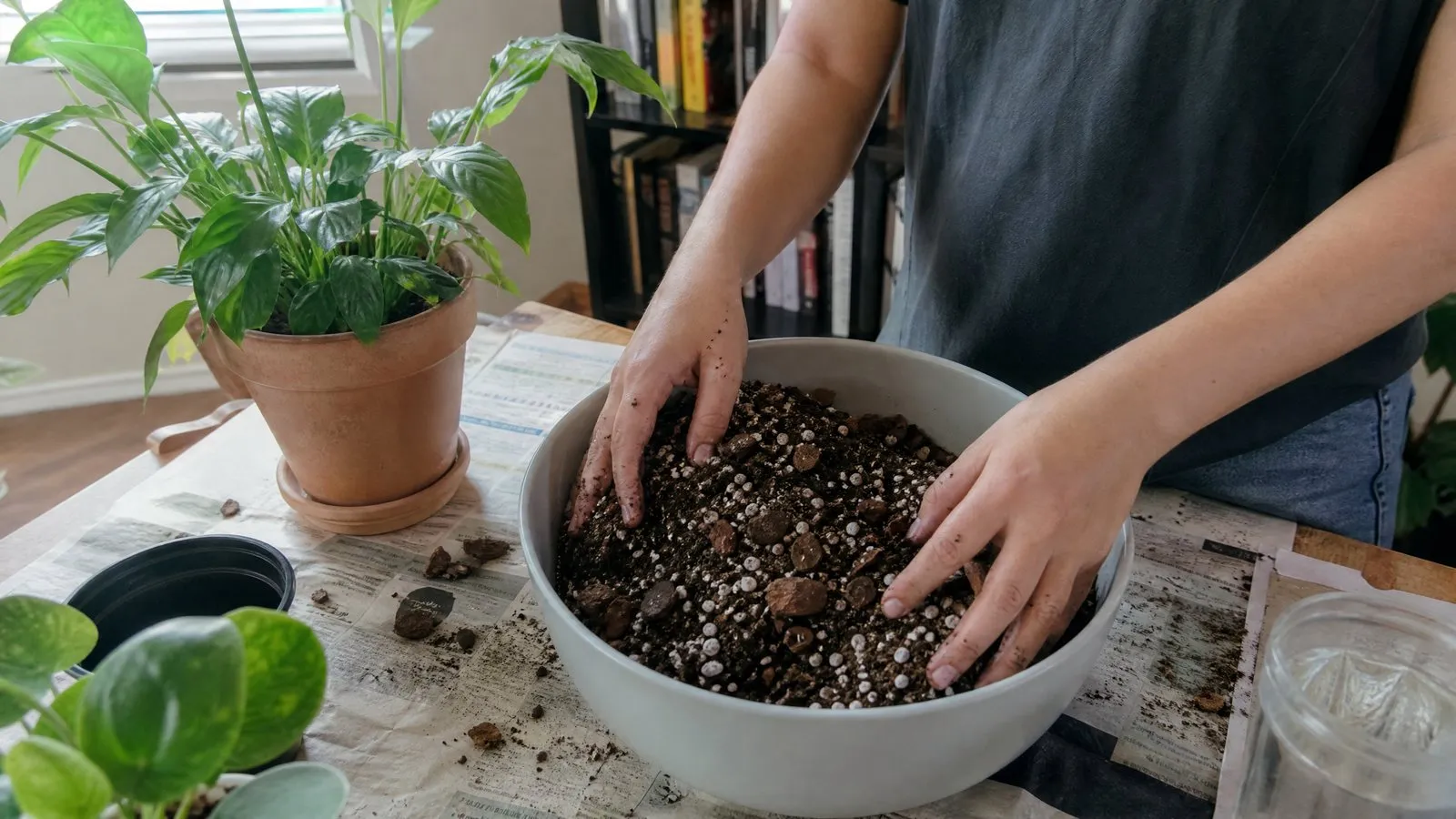
Reach for a bagged “potting mix” or “houseplant potting mix,” not garden soil or topsoil. A good standard mix is light, holds some moisture, and drains fast enough that water runs out the bottom within a few seconds. For most beginner plants, that bag is all you need. Once you grow aroids like monstera or succulents like cacti, you’ll want to adjust the recipe, and that’s easy to do.
Here’s how to choose the right mix for what you’re growing, and when to make your own.
Why garden soil doesn’t belong in a pot
Garden soil and topsoil are built for the ground, where water drains away through yards of earth and worms keep everything loose. Pack that same soil into a pot and it behaves completely differently.
In a container, dense garden soil:
- Compacts into a solid brick. Roots can’t push through it and air can’t reach them.
- Holds too much water. Without deep ground to drain into, the soil stays soggy and roots rot. Overwatering is the number one way people kill houseplants, and heavy soil makes it almost guaranteed.
- Brings in pests, weed seeds and disease. Outdoor soil often carries fungus gnat larvae, which thrive in wet pots. If you’ve battled them before, soil is a common source.
University extension programs, including the University of Minnesota Extension, consistently recommend a soilless potting mix for containers rather than true garden soil for exactly these reasons.
A quick note on names: “potting soil” and “potting mix” are usually sold as the same thing and often contain no actual soil at all. What matters is the label says it’s for containers or houseplants, not “garden soil,” “topsoil,” or “raised bed soil.”
What’s in a standard potting mix
Most bagged houseplant mixes are built from a few simple ingredients, each doing a job:
| Ingredient | What it does | Notes |
|---|---|---|
| Peat moss or coco coir | Holds moisture and nutrients, gives the mix body | Coir is the common peat-free swap |
| Perlite | Creates air pockets and improves drainage | The white, lightweight bits |
| Vermiculite | Holds moisture and some nutrients | Softer, flakier than perlite |
| Composted bark or fine wood products | Adds structure and air | Common in cheaper mixes |
| Small amount of fertilizer | Feeds the plant for the first few weeks | “Feeds up to X months” claims are modest |
A decent all-purpose mix works for the majority of easy houseplants: pothos, spider plants, peace lilies, philodendrons and most ferns. If you’re starting out, see our guide to the easiest houseplants for beginners for plants that forgive a mix that isn’t perfect.
How to judge a bag by feel: it should be light and fluffy, smell earthy (not sour), and spring back when you squeeze a damp handful rather than staying in a tight clump.
When to add perlite or bark for drainage
Many bagged mixes, especially budget ones, hold more water than houseplants like. If your soil stays wet for more than a week, or you keep seeing signs of overwatering, add drainage material.
The simplest fix is perlite. Stir in enough to make up roughly 20 to 30 percent of the total volume, which looks like one part perlite to three or four parts mix. Your soil will dry out faster and let more air reach the roots.
Orchid bark (small-grade fir or pine bark) does a similar job but creates bigger air channels and breaks down more slowly. It’s ideal for plants that like to dry between waterings.
Add more drainage when:
- Your pot has no drainage hole, or only a small one (first, though, read how to choose the right pot).
- Your home is cool, low-light or humid, so soil dries slowly.
- You tend to water generously.
- You’re growing a plant prone to root rot, like a snake plant.
Add less, or none, when your home is hot and dry, your plant wilts quickly, or you’re growing a thirsty plant like a peace lily.
One myth to drop: a layer of gravel or crocks at the bottom of the pot does not improve drainage. It actually raises the soggy zone higher up into the root ball. Better drainage comes from the mix itself and a drainage hole.
Chunky mix for aroids (monstera, philodendron, pothos)
Aroids are the big-leaved crowd-pleasers: monstera, philodendron, pothos, anthurium and peace lilies. In the wild, many climb trees and their roots sit in loose leaf litter and bark, with plenty of air. They rot in dense, wet soil but thrive in a chunky, open mix.
A reliable chunky aroid mix, by rough volume:
- 2 parts standard potting mix
- 1 part orchid bark
- 1 part perlite
- Optional: a handful of horticultural charcoal per few quarts, which helps keep the mix fresh
This drains fast, holds just enough moisture, and gives thick aroid roots room to breathe. You’ll likely water a little more often, which is a fair trade for roots that don’t sit wet.
For the specific plants, see our monstera care guide and pothos care guide. If leaves are yellowing, soil that stays too wet is a common cause, covered in why plant leaves turn yellow.
Gritty mix for succulents and cacti
Succulents and cacti store water in their leaves and stems, so their roots need to dry out fast. Standard potting mix alone stays far too wet for them. You want a mix that’s roughly half grit.
A simple succulent and cactus mix:
- 1 part standard potting mix (or a bagged cactus mix)
- 1 part perlite, pumice, or coarse horticultural sand
For cacti and sensitive succulents that rot easily, go grittier, up to two parts grit to one part soil. Pumice is excellent if you can find it because it holds a little moisture and plenty of air without floating to the top like perlite can.
Avoid fine builder’s sand or play sand, which packs down and makes drainage worse. Use coarse, gritty grades only.
Snake plants, though often grouped with succulents, do fine in a standard mix with extra perlite. See the snake plant care guide for details.
Peat-free options
Peat moss is the traditional base of most potting mixes, but harvesting it damages peat bogs, which store large amounts of carbon. In the UK, the Royal Horticultural Society has moved firmly toward peat-free growing, and bagged peat-free mixes are now the norm there and increasingly common across Canada, Australia and the US.
The main peat-free alternatives:
- Coco coir (coconut fiber): The most common swap. It holds moisture well and rewets easily. It can be low in nutrients, so plants may need feeding a little sooner.
- Composted bark and wood fiber: Often blended into peat-free mixes for structure and air.
- Composted green waste: Used as a base in some bagged peat-free products.
Peat-free mixes can behave a little differently. Some dry on top while staying wet below, so check moisture deeper in the pot rather than trusting the surface, and feed a bit earlier since nutrients can run out faster. See how and when to fertilize houseplants.
If you want to avoid peat, read the bag. Many general mixes still contain it unless they clearly say “peat-free.”
A simple “house blend” you can make from one bag
You don’t need five bags of ingredients. With one bag of standard mix plus perlite and bark, you can mix almost anything:
- Easy foliage plants (pothos, spider plant, peace lily): standard mix, plus a handful of perlite if it feels heavy.
- Aroids (monstera, philodendron): 2 mix : 1 bark : 1 perlite.
- Succulents and cacti: 1 mix : 1 perlite or pumice.
- Herbs and leafy greens indoors: standard mix with a little extra perlite; see how to grow herbs indoors.
Mix in a large bowl or bucket, dampen it slightly so it isn’t dusty, and you’re ready to pot.
When to replace or refresh soil
Potting mix doesn’t last forever. Over time it breaks down, compacts, loses air, and the fertilizer runs out. As a general rule, refresh or replace soil every 12 to 24 months, or when you see these signs:
- Water runs straight through without wetting the soil, or pools on top and drains slowly. Both signal broken-down, compacted mix.
- The plant has outgrown the pot, with roots circling the bottom or poking out the drainage hole.
- White crust on the soil or pot rim from mineral and fertilizer buildup.
- A persistent sour smell, fungus gnats, or soil that stays wet for far too long.
- Growth has stalled despite decent light and watering.
You don’t always need a bigger pot. If the plant is happy at its current size, you can refresh the soil and return it to the same pot. When you do move up, go just 1 to 2 inches wider in diameter, no more, because a pot that’s too big holds excess wet soil. Our guide to repotting without killing it walks through the whole process.
Most houseplants are best repotted in spring or early summer, when they’re actively growing and recover fastest.
A few honest caveats
Homes vary more than any recipe. A monstera in a bright, warm apartment dries out far faster than the same plant in a cool, dim room, so the “right” mix depends partly on your conditions and watering habits. The reliable move is always to check the soil before watering rather than following a calendar; our guide on how often to water explains how, and the free watering planner can help you track it.
If you’re new to all of this, don’t overthink the mix. A bag of standard potting soil and a scoop of perlite will keep most beginner plants alive and happy. You can fine-tune as you go.
FAQ
Can I reuse old potting soil?
You can reuse mix from a healthy plant by loosening it, mixing in fresh potting soil and a little perlite, and adding fertilizer later. Don’t reuse soil from a plant that had root rot, fungus gnats, or pests, as the problem can carry over. When in doubt, start fresh.
Do I need special cactus or orchid soil, or can I make my own?
You can make your own. Cactus mix is just standard potting soil cut roughly half and half with perlite or pumice. Orchid bark is useful for aroids and as a drainage additive. Buying the specialty bags is convenient, not essential.
Is it bad that my potting mix has fertilizer in it?
No, a small amount of starter fertilizer is normal and feeds the plant for the first several weeks to a few months. After that you’ll need to feed it yourself. Just don’t add more fertilizer on top of a freshly potted plant right away; wait until the starter charge runs out.
Why does my soil dry out on top but stay wet underneath?
This is common with peat-free and coir-based mixes, and with pots that are too large. The surface dries while the root zone stays soggy. Check moisture a couple of inches down with your finger or a wooden skewer, and consider adding more perlite or moving to a smaller pot. See overwatering vs underwatering if you’re unsure which problem you have.
Can I use potting soil for indoor herbs and vegetables?
Yes. A standard potting mix, with a little extra perlite for drainage, works well for most indoor herbs and leafy greens. Edibles are hungrier than foliage houseplants, so they benefit from feeding during active growth. See how to grow herbs indoors to get started.