How to Grow Herbs Indoors on a Windowsill
Grow herbs indoors on a windowsill with the right light, pots and watering. Start basil, mint, chives, parsley, oregano or thyme and harvest more.
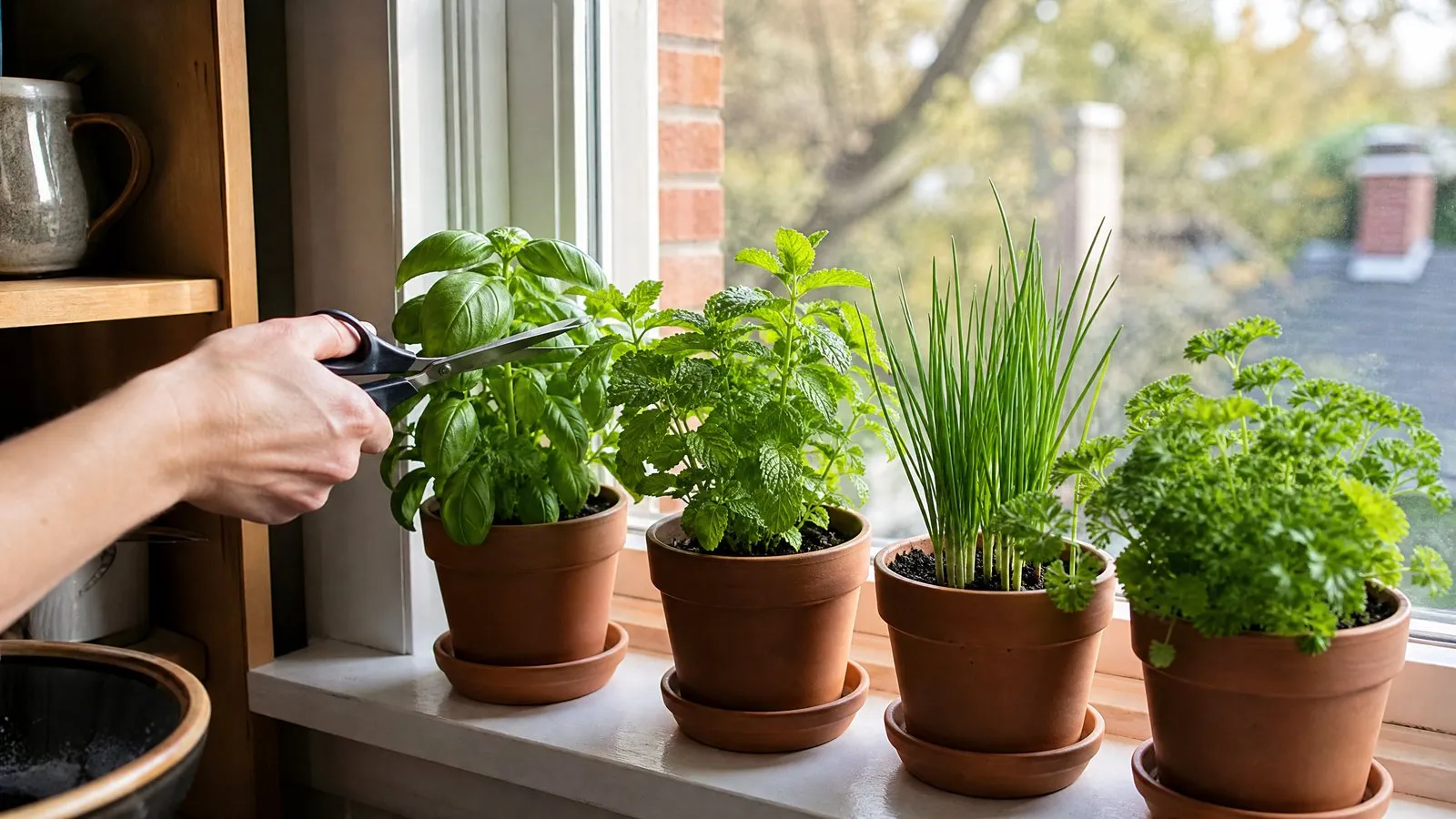
You can grow fresh herbs on a windowsill if you can give them about 6 or more hours of bright light a day (or a grow light), a pot with a drainage hole, and water when the top inch of soil feels dry. Start with forgiving herbs like basil, mint, chives, parsley, oregano or thyme, buy starter plants if you want a head start, and harvest little and often to keep them bushy.
That’s the whole game. Here’s how to do each part well.
Pick the right window first
Light is the single biggest thing that decides whether your herbs thrive or sulk. Most culinary herbs are sun-lovers that want 6 to 8 hours of direct or very bright light a day.
- South-facing windows (in the Northern Hemisphere) give the most light and suit nearly every herb.
- West- and east-facing windows can work, especially for mint, parsley and chives, which tolerate a bit less sun.
- North-facing windows rarely give enough light on their own. You’ll want a grow light.
In the UK, Canada and the northern US, winter light drops sharply. A windowsill that’s generous in July can be too dim from November to February. That’s normal, and it’s the main reason indoor herbs get leggy and pale in winter.
Not sure how to judge your window? Our guide to how much light houseplants need explains bright, medium and low light in plain terms.
When to use a grow light
If your brightest window gives less than about 6 hours of good light, or your herbs are stretching toward the glass with long gaps between leaves, add a grow light. Run it for 12 to 14 hours a day on a timer, positioned a few inches above the plants.
A simple LED on a timer solves most winter problems. See how to choose and use grow lights for the details.
The easiest herbs to start with
These six are the most forgiving for beginners indoors. Here’s how they compare.
| Herb | Light needs | Watering style | Best start | Notes |
|---|---|---|---|---|
| Basil | 6–8 hrs, loves warmth | Keep evenly moist | Starter plant or seed | Hates cold; pinch often to keep bushy |
| Mint | 4–6 hrs, tolerates less | Likes moist soil | Starter plant | Vigorous; give it its own pot |
| Chives | 6 hrs | Moderate, let top dry | Starter plant or seed | Easy; snip like scissors-grass |
| Parsley | 5–6 hrs | Keep lightly moist | Starter plant | Slow from seed; biennial |
| Oregano | 6–8 hrs | Let dry between | Starter plant | Mediterranean; dislikes soggy soil |
| Thyme | 6–8 hrs | Let dry between | Starter plant | Small, drought-tolerant, slow grower |
A quick grouping that helps with watering: basil, mint and parsley like to stay evenly moist, while oregano and thyme prefer to dry out a bit between waterings. Chives sit in the middle. If you grow them in separate pots, you can water each to its own rhythm.
One warning about mint: it’s a spreader. Even indoors it will try to take over a shared pot, so give it a container of its own.
Seeds vs starter plants
For most people, starter plants are the easier win. You get an instant harvest, you skip the fussiest few weeks, and you’re far less likely to give up.
Buy starter plants if you:
- Want to cook with herbs within days, not weeks.
- Are growing woody herbs like oregano, thyme or rosemary, which are slow and tricky from seed.
- Have killed plants before and want an encouraging start.
Grow from seed if you:
- Enjoy the process and don’t mind waiting 2 to 8 weeks.
- Want lots of plants cheaply, or specific varieties.
- Are growing fast, easy-from-seed herbs like basil, chives and cilantro.
A note on supermarket “living herb” pots, especially basil: they’re usually dozens of seedlings crammed into one tiny pot, grown fast for a quick sale. They rarely last long as-is. You can rescue them by splitting the clump into 2 or 3 smaller clumps and repotting into roomier containers with fresh soil.
If you sow seeds
- Fill a small pot with damp potting mix to about half an inch below the rim.
- Scatter seeds thinly and cover with a quarter inch of mix (tiny seeds like thyme need only a dusting).
- Keep warm (65–75°F / 18–24°C) and lightly moist, not wet.
- Most herbs sprout in 1 to 3 weeks. Once seedlings have a couple of sets of true leaves, thin to the strongest few per pot.
Pots and drainage
The one non-negotiable: every pot needs a drainage hole. Herbs will rot in soil that can’t drain, and more windowsill herbs die from soggy roots than from anything else.
- Size: A pot 5 to 7 inches across suits one herb nicely. Bigger herbs like mint and parsley appreciate 6 to 8 inches.
- Material: Terracotta dries faster and suits thyme and oregano, which hate staying wet. Plastic and glazed ceramic hold moisture longer and suit basil, mint and parsley. Neither is wrong, it just changes how often you water.
- Drip tray: Use a saucer so you don’t flood your sill, and empty it after watering so the pot isn’t sitting in water.
If you want to grow several herbs in one long trough, group ones with similar needs together, and keep mint out of it. Our guide to choosing the right pot covers size and material in more depth.
Soil
Use a general-purpose potting mix, not garden soil, which is too dense and may bring in pests. For Mediterranean herbs (thyme, oregano, rosemary), mixing in a handful of perlite or coarse grit improves drainage. See potting soil for houseplants if you want to understand the ingredients or mix your own.
Watering without a calendar
Check the soil, don’t water on a fixed schedule. The reliable test: push a finger an inch into the soil. If it feels dry at your fingertip, water. If it’s still damp, wait and check again tomorrow.
When you do water, water thoroughly until it runs out the drainage hole, then empty the saucer. This wets the whole root ball and flushes out salts.
Rough ranges, which depend heavily on your light, warmth and pot:
- Basil, mint, parsley: every 2 to 4 days, kept lightly moist.
- Chives: every 4 to 6 days.
- Oregano, thyme: every 5 to 10 days, letting the top inch or two dry first.
Herbs on a bright, warm sill dry out fast, so check small pots daily in summer. Our full explainer on how often to water goes deeper, and if you’re unsure which way a struggling plant is going, see overwatering vs underwatering. You can also map out a routine with our free Watering Planner.
Feeding
Potted herbs run out of nutrients within a month or two because watering washes them away. Feed lightly during active growth, spring through early fall, with a balanced liquid fertilizer at half the label strength, every 2 to 4 weeks.
Go easy. Over-fed herbs grow fast and floppy, and some, like basil, lose flavor when pushed too hard. Our guide on how and when to fertilize has the specifics.
Harvesting to encourage growth
Here’s the part that surprises people: regular harvesting makes herbs grow bushier, not weaker. The trick is to cut in the right place.
For leafy herbs (basil, mint, oregano): snip just above a pair of leaves or a leaf node. The plant responds by sending out two new stems below the cut, so it gets fuller each time. Pinch out flower buds as they appear to keep the plant producing leaves.
For basil specifically: start pinching the growing tips once the plant has 3 or 4 sets of leaves, and keep it up. This is the single biggest thing that keeps basil bushy instead of tall and spindly. We cover it in detail in how to grow basil indoors.
For chives: cut whole leaves down to about 1 to 2 inches above the soil with scissors. They regrow from the base.
For parsley: harvest outer stems from the base first, leaving the central new growth to keep coming.
For woody herbs (thyme, oregano): trim soft green stem tips rather than cutting into old brown wood, which is slow to resprout.
A good rule: take no more than a third of the plant at once, then let it recover. Harvest in the morning when the leaves are freshest.
Common problems and quick fixes
Leggy, stretched, pale stems. Not enough light. Move to a brighter window or add a grow light, and pinch back the stretched growth to encourage compact regrowth.
Yellowing lower leaves. Often overwatering or spent soil. Check that the pot drains, let the top inch dry before watering again, and start light feeding. More causes in why leaves turn yellow.
Wilting and drooping. Could be too dry or too wet. Feel the soil: bone dry means water now; soggy means you’ve overwatered and need to let it dry out. See why plants droop and how to revive them.
Basil leaves with brown or black patches. Basil is cold-sensitive. Keep it above 60°F / 15°C and away from cold window glass and drafts in winter.
Tiny flies around the pot. Fungus gnats, which thrive in constantly wet soil. Let the top layer dry out more between waterings. Full fix in how to get rid of fungus gnats.
Fine webbing and stippled leaves. Spider mites, which love warm, dry indoor air. Here’s how to spot and treat them.
White cottony blobs on stems. Mealybugs. Catch them early and deal with them as shown in how to get rid of mealybugs.
Plant bolts to flower (especially basil, cilantro). Warm temperatures and age trigger flowering. Pinch out flower stalks to extend the harvest, but know that cilantro in particular is short-lived indoors and best resown every few weeks.
A simple windowsill starter plan
If you want one good setup to copy:
- Buy starter plants of basil, chives and parsley (or mint if you love it).
- Repot each into its own 5 to 7 inch pot with a drainage hole, in general potting mix.
- Put them on your brightest windowsill, aiming for 6+ hours of light, or under a grow light for 12 to 14 hours.
- Check the soil daily at first; water when the top inch is dry.
- Start pinching basil and snipping chives within a week or two to keep them productive.
That’s enough to cook with and enough to learn the rhythm of your own home. New to indoor growing in general? Our houseplant care for beginners guide covers the five things that matter most, and if you catch the bug, try microgreens in 10 days or growing lettuce and salad greens indoors.
FAQ
Which herb is the easiest to grow on a windowsill?
Chives and mint are the most forgiving. Chives tolerate a range of light and bounce back from hard harvesting, and mint grows vigorously even in a less-than-perfect window. Basil is easy too, as long as you give it warmth and plenty of light.
Can I grow herbs indoors without a grow light?
Yes, if you have a bright window that gets about 6 or more hours of light a day, ideally south-facing. If your brightest spot falls short, or your herbs stretch and pale in winter, a grow light on a timer makes a big difference.
Why is my basil tall and spindly instead of bushy?
Almost always too little light, not enough pinching, or both. Move it to a brighter spot or add a grow light, then pinch out the growing tips above a leaf pair regularly so it branches out instead of shooting up.
How often should I water windowsill herbs?
Check the soil rather than following a schedule. Water when the top inch feels dry, which is often every 2 to 4 days for basil, mint and parsley, and every 5 to 10 days for thyme and oregano. Warm, bright sills dry out faster, so check small pots daily in summer.
Are kitchen herbs safe for cats and dogs?
Many common culinary herbs are considered non-toxic, but some, like chives (which are in the onion family), can be harmful to pets. Check the ASPCA’s toxic plant list, keep pots out of reach, and see our guide to houseplants safe for cats and dogs. If you think a pet has eaten something harmful, contact your vet.