Grow Lights for Houseplants: How to Choose and Use Them
Grow lights help plants survive low-light rooms. Learn full-spectrum LED basics, wattage vs output, distance, and hours per day for foliage and edibles.
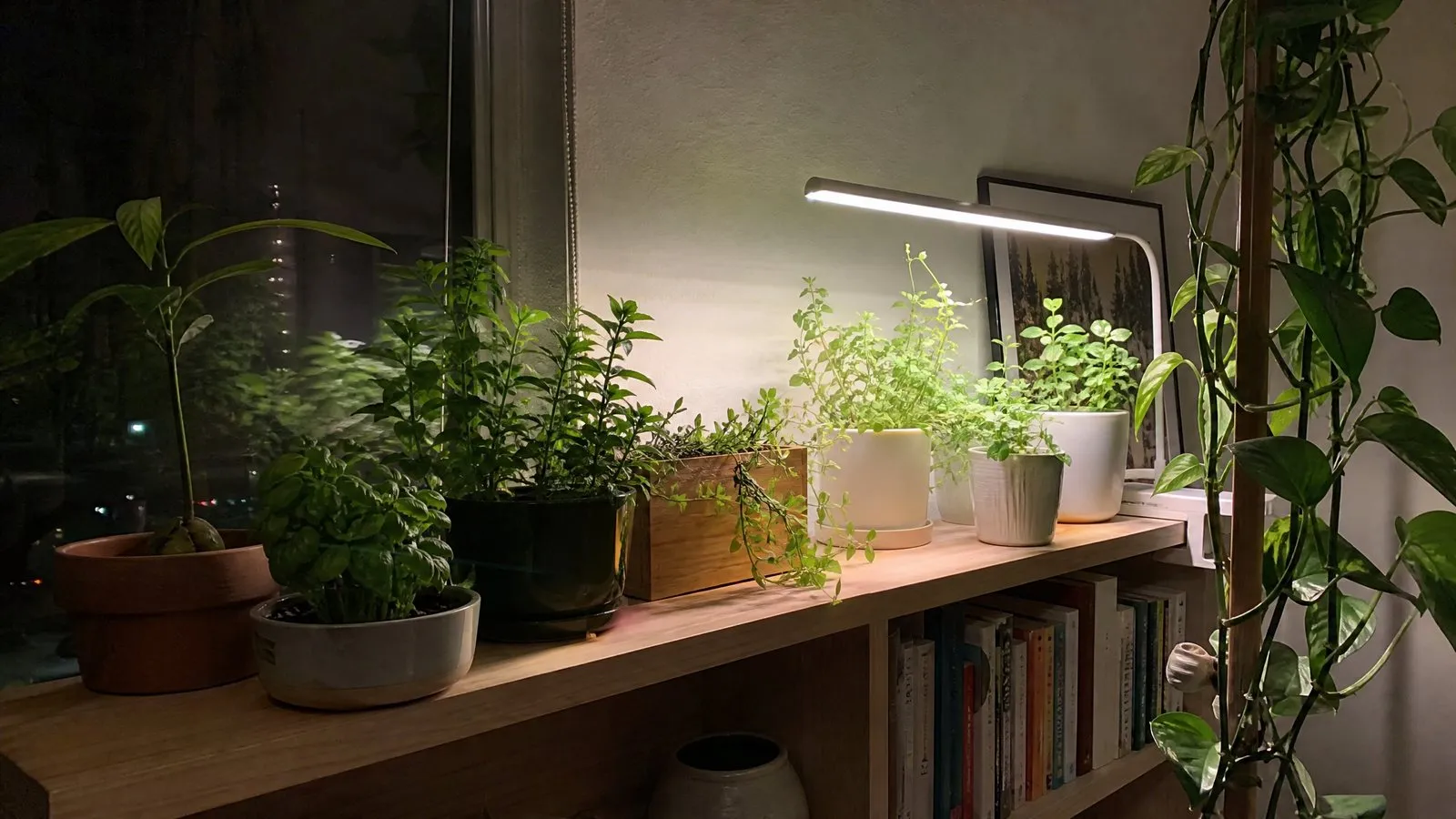
A grow light is worth it when your plant isn’t getting enough natural light to stay healthy, and you can’t move it somewhere brighter. For most foliage houseplants, a full-spectrum LED run 10-12 hours a day fills the gap. For edibles like herbs and salad greens, you’ll need more light and longer hours, usually 12-16 hours a day. That’s the short version. Here’s how to pick the right light and set it up so it actually works.
When a grow light is worth it (and when it isn’t)
Before you buy anything, be honest about your light. Most houseplants struggle not because of the wrong fertilizer or watering schedule, but because the room is simply too dark. If you’re not sure how much light your space gets, our guide on how much light houseplants need will help you read your windows first.
A grow light makes sense when:
- Your brightest windowsill still leaves plants leggy, pale, or stalled.
- You have a north-facing window (or no usable window) in the room you want plants in.
- Winter days are short and your plants visibly decline from November to February.
- You want to grow edibles indoors, which almost always need more light than a windowsill provides.
A grow light is not worth it when a free fix exists. Moving a plant two feet closer to a window, cleaning dust off the leaves, pulling back a sheer curtain, or swapping a thirsty plant for a low-light one often solves the problem for nothing. If your plant is suffering and you’re not sure light is the cause, rule out the usual suspects first with our beginner care guide and the piece on yellowing leaves.
Signs a plant wants more light
- Long gaps between leaves (“leggy,” stretched stems)
- New leaves smaller than old ones
- Pale or washed-out color
- Leaning hard toward the window
- Variegated plants losing their pattern and turning plain green
- Slow or no new growth during the growing season
Full-spectrum LED basics
For indoor growing at home, full-spectrum LED is the sensible default. Here’s why, in plain terms.
Full-spectrum means the light covers the range plants use, roughly the same mix as daylight. Older setups used separate red and blue bulbs that cast a purple glow. Those work, but they’re ugly in a living room and harder to judge. Modern full-spectrum white LEDs look like ordinary bright daylight, so they blend into a home and let you actually see your plants’ real color.
LED matters because it runs cool, uses little electricity, and lasts for years. Cool-running is a real safety and plant-health benefit: you can place an LED close to foliage without scorching it, which you can’t do with old incandescent or strong halogen bulbs.
You don’t need anything exotic. A white, full-spectrum LED labeled for plants, or even a very bright daylight LED (around 5000-6500K color temperature), will grow most houseplants.
What the numbers on the box mean
Three terms get thrown around. Here’s what to trust:
- Color temperature (Kelvin, K): How warm or cool the light looks. 5000-6500K is a daylight-white that suits most plants and looks clean indoors. Warmer (2700-3500K) light also grows plants and can encourage flowering, but looks yellow.
- PAR / PPFD: This measures the light plants can actually use for photosynthesis, at a given distance. It’s the most meaningful number, but not every consumer light lists it honestly. If it’s given, higher PPFD at your plant’s distance means more usable light.
- Lumens: Measures brightness as the human eye sees it. It’s a rough guide for plants, not a precise one, but a higher-lumen light is generally brighter.
University extension programs, including Michigan State University Extension, note that ordinary white LEDs can grow plants perfectly well, and that the specialty color spectrum matters far less than getting enough total light at the right distance.
Wattage vs light output
Here’s the mistake almost everyone makes: shopping by wattage. Watts measure energy use, not how much light reaches your plant. A modern LED produces far more light per watt than an old bulb, so “100W” tells you almost nothing on its own.
Two things actually determine whether your plant gets enough:
- How much light the fixture puts out (its real output, ideally PAR/PPFD).
- How close the plant sits to it — light falls off fast with distance.
Think of it like a shower head. The total water is the output; how wet you get depends on how close you stand. Double the distance and the light hitting the plant drops to roughly a quarter.
So instead of chasing wattage, match the light’s output to the job, then set the right distance and run time. The table below gives workable starting points.
Distance and hours per day
| Plant type | Example plants | Hours per day | Distance from light* |
|---|---|---|---|
| Low-light foliage | Pothos, snake plant, ZZ, peace lily | 10-12 | 12-24 in (30-60 cm) |
| Medium/bright foliage | Monstera, fiddle leaf, calathea, spider plant | 10-12 | 8-18 in (20-45 cm) |
| Herbs | Basil, parsley, mint, cilantro | 12-14 | 6-12 in (15-30 cm) |
| Salad greens | Lettuce, arugula, spinach | 12-16 | 6-12 in (15-30 cm) |
| Seedlings/microgreens | Any started indoors | 14-16 | 2-6 in (5-15 cm) |
*Distances are general starting points for consumer LED fixtures. Always check the manufacturer’s recommended hanging height, since brighter panels need to be farther away.
How to dial it in
Start in the middle of the ranges, then watch the plant for a week or two:
- Too far / too little light: growth stays leggy and pale, plants lean toward windows anyway. Move the light closer or add hours.
- Too close / too much light: leaves bleach, look washed out or crispy at the tips directly under the light, or curl away. Raise the light a few inches.
Foliage plants don’t benefit from running lights 24/7. Plants need a dark period, so never leave a grow light on around the clock. More than about 16 hours gives diminishing returns and stresses many plants. Even for edibles, give them at least 8 hours of darkness.
Remember a grow light only solves the light problem. Your watering still depends on the pot, soil and conditions, not a calendar. More light often means plants dry out faster, so check the soil more often and lean on our guide to how often to water or the free Watering Planner.
Use a timer (this is the easy win)
The single best upgrade to any grow light is a cheap plug-in timer. Consistency matters more than perfection, and no one remembers to flip a switch at 7 a.m. and 9 p.m. every day for months.
- A basic mechanical timer (the dial kind) is foolproof and cheap.
- A digital timer lets you set exact on/off times and is easier for odd schedules.
- Some grow lights have a timer built in; check whether it’s a true clock or just a “cycle” that drifts.
Set it and forget it. Pick a schedule that matches your plant type from the table above, line it up with your daytime so the room doesn’t glow all night, and walk away.
Bulbs vs bars vs panels
The right shape of light depends on what and how much you’re growing. Here’s how the common types compare.
| Type | Best for | Coverage | Notes |
|---|---|---|---|
| Screw-in bulb | One plant, a shelf corner, a single pot | Small (one plant) | Fits normal lamps and sockets. Easiest entry point. Aim it directly at the plant, not across the room. |
| Clip-on / gooseneck | One or two plants, a desk, a windowsill herb | Small–medium | Flexible positioning; good for renters. Check the clamp fits your shelf. |
| Light bar / strip | A shelf, a row of herbs, under a cabinet | Medium (linear) | Mounts under shelves; several can link together. Great for bookshelf plant setups. |
| Panel / larger fixture | A plant cluster, seed starting, salad trays | Large | Most output and even coverage; also the most noticeable in a room. Needs more hanging height. |
Matching the light to your setup
- One sad pothos in a dim corner: a single bulb in an existing lamp, or a clip-on, is plenty. (See pothos care.)
- A shelf of foliage: light bars mounted under each shelf above the plants.
- Herbs on a kitchen counter: a bar or clip-on 6-12 inches above. Pair it with our indoor herbs guide or the deep dive on growing basil indoors.
- Seed starting, microgreens, or lettuce trays: a panel or multiple bars close overhead. See growing lettuce indoors and microgreens.
A few practical cautions
- Position the light directly above or beside the plant, not across the room. Light that has to travel far is light your plant won’t get.
- Rotate plants a quarter turn every week or so for even growth, especially with a single bulb off to one side.
- Watch for drying out. Plants under good light grow faster, use more water, and may need more frequent feeding during active growth.
- Heat is low with LEDs, but still check that bulbs aren’t touching leaves, and that the fixture is rated for the socket you’re using.
- Looks matter in a home. Daylight-white (5000-6500K) reads as normal bright light; purple “blurple” lights can make a living room feel like a lab.
- Pets and placement: keep cords tidy and out of reach. A brighter plant is still the wrong plant if it’s toxic to a curious pet, so check our list of houseplants safe for cats and dogs.
Add light first, then let the rest of your care routine catch up. If growth is still disappointing after a few weeks of good light, look at the pot, soil and watering, starting with overwatering vs underwatering, since those problems don’t fix themselves no matter how bright the room gets.
FAQ
Can I just use a regular LED bulb instead of a grow light?
Often, yes, for foliage plants. A bright, daylight-white LED (around 5000-6500K) placed close to the plant will grow most low- and medium-light houseplants. The main limits are output and distance: ordinary bulbs are usually dimmer than purpose-built grow fixtures, so keep them close and expect slower results. For hungry edibles like lettuce and basil, a dedicated grow light performs noticeably better.
How long should I leave my grow light on?
For foliage houseplants, 10-12 hours a day. For herbs and salad greens, 12-16 hours. Never run it 24 hours a day, plants need a dark rest period of at least 8 hours. A plug-in timer handles this automatically and keeps the schedule consistent, which matters more than the exact minutes.
Will a grow light hurt my eyes or my pets?
Full-spectrum white LEDs used at home are generally fine for normal room exposure, but don’t stare directly into any bright light. Very intense panels can be uncomfortable to look at up close, so position them to shine down on plants, not out at eye level. Keep cords and fixtures out of reach of pets and children, and make sure any plant you’re lighting is pet-safe in the first place.
How close should the grow light be to my plants?
It depends on the fixture’s output, but as a starting point: 12-24 inches for low-light foliage, 8-18 inches for brighter foliage, and 6-12 inches for herbs and greens. Brighter panels need more distance. If leaves directly under the light bleach or crisp, raise it a few inches; if plants stay leggy and pale, lower it or add hours.
Do grow lights use a lot of electricity?
Modern LED grow lights are efficient and usually cost little to run, since most home setups draw far less power than old-style bulbs. Wattage tells you energy use, not plant benefit, so don’t assume a higher-watt light is better, only that it costs more to run. For a small shelf or a couple of plants, the monthly cost is typically modest.