Houseplant Care for Beginners: The 5 Things That Matter Most
Master houseplant care with the 5 things that matter most: light, water, drainage, soil and humidity, plus a weekly routine and beginner mistakes to avoid.
Most houseplants die from just a few fixable mistakes, and almost none of them involve forgetting to talk to your plant. If you get five things right, in this order of importance, your plants will mostly take care of themselves: light, watering, drainage, soil, and humidity.
Here’s the short version. Put the plant where it gets enough light for its type. Water only when the soil tells you to, not on a fixed day. Use a pot with a drainage hole. Use real potting mix, not garden soil. Worry about humidity last, and only for a few fussy plants.
Let’s go through each one so you can act today.
1. Light: the thing beginners underestimate most
Light is the single biggest factor in whether a plant thrives or slowly fades. A plant in the wrong light can’t be saved by perfect watering. Everything else is secondary.
The problem is that homes are much darker than they feel. Your eyes adjust automatically, so a spot that looks “bright” to you may be dim to a plant. A good gut check: if you can read a book comfortably without turning on a lamp in the daytime, that’s roughly medium light. If you need a lamp, it’s low light.
Here’s how the common categories break down:
| Light level | What it means | Where it usually is | Example plants |
|---|---|---|---|
| Bright, indirect | Lots of light, no direct sun on leaves | Near (not in) a south or west window; right at an east window | Monstera, most tropicals, herbs |
| Medium | Softer light, some hours of brightness | A few feet back from a bright window; a north window | Pothos, peace lily, spider plant |
| Low | Dim but not dark | Corners, hallways, further from windows | Snake plant, ZZ plant (they tolerate it, not love it) |
A few honest notes:
- Direct sun (rays actually landing on the leaves) suits cacti, succulents and many herbs, but scorches tropicals like calathea.
- Window direction matters. South-facing windows are brightest in the Northern Hemisphere; in Australia, north-facing windows get the most sun.
- Light drops off fast as you move away from a window. A plant two feet from the glass gets a fraction of what one right beside it does.
If your space is genuinely dark, you have two choices: pick plants that tolerate low light, or add a grow light. Both work. For the full breakdown, see how much light houseplants need and how to choose and use grow lights.
2. Watering: check the soil, never the calendar
More houseplants are killed by overwatering than by anything else. The fix is simple: stop watering on a schedule, and start checking the soil.
“Once a week” is a myth because every home is different. Your plant drinks faster in a warm, bright summer room and slower in a cool, dim winter one. The same pot might need water every 5 days in July and every 14 days in January.
The finger test
Push your finger into the soil up to the second knuckle, about 2 inches deep.
- Comes out with damp soil clinging to it? Wait.
- Comes out dry and clean? Time to water.
For most leafy tropicals (pothos, monstera, peace lily), water when the top 1 to 2 inches feel dry. For succulents and snake plants, let most or all of the pot dry out first.
How to water properly
When you do water, water thoroughly. Pour slowly until water runs out the drainage hole, then let the pot finish draining and empty the saucer. This wets the whole root ball and flushes out salt buildup. A light splash on top does more harm than good because it leaves the deep roots dry and the surface constantly damp.
Signs you’re getting it wrong often look similar, so it helps to learn the tells in overwatering vs underwatering. As a rule: yellowing lower leaves and soggy, smelly soil point to too much water; crispy brown edges and bone-dry soil point to too little.
If you want help pacing it, our free Watering Planner and the deeper guide on how often to water are good next steps.
3. Drainage: the cheapest insurance you can buy
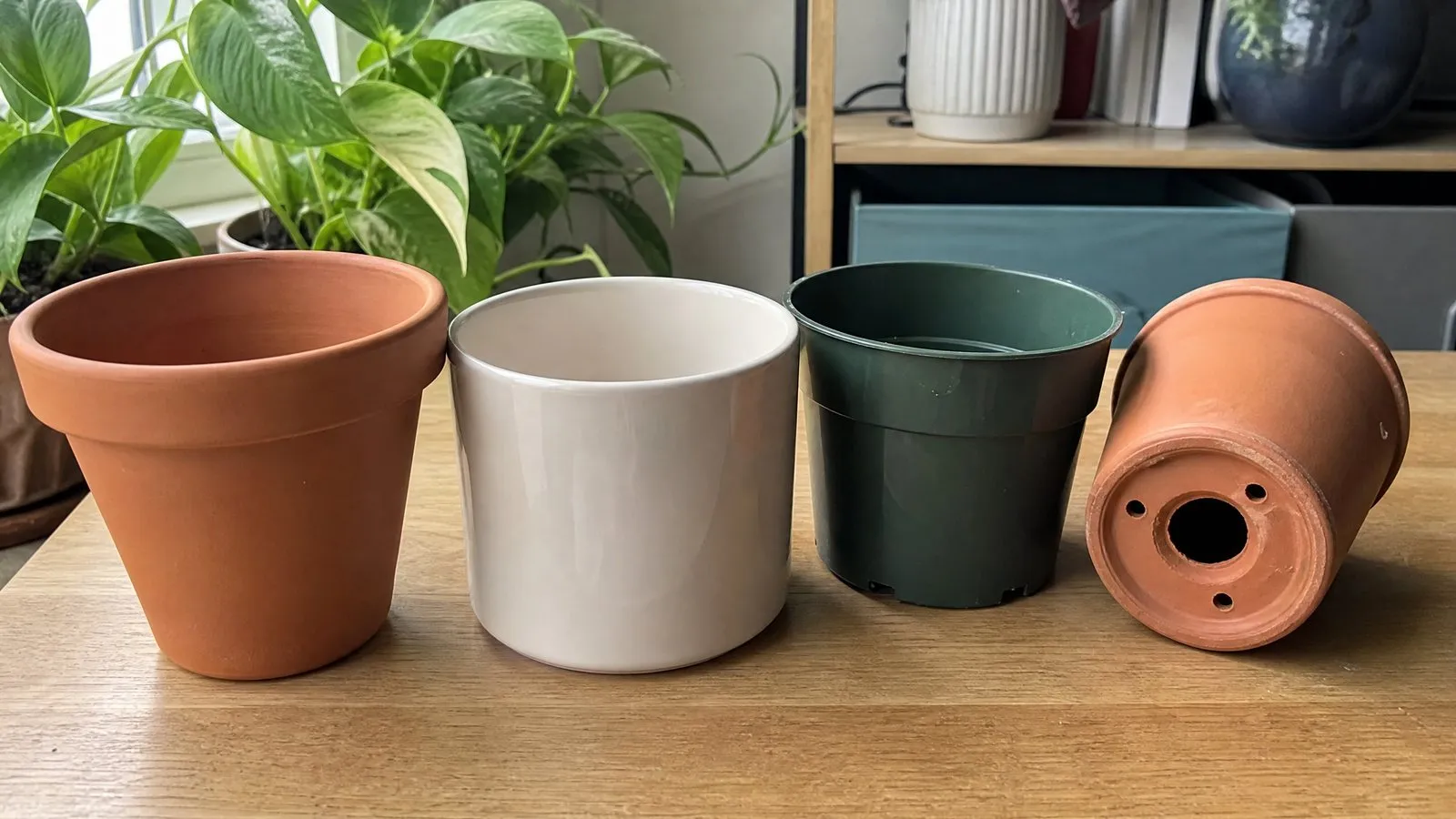
Drainage is where good watering intentions go to die. Your pot must have a hole in the bottom. This is non-negotiable for beginners.
Roots need air as well as water. In a pot with no drainage hole, excess water collects at the bottom, roots sit in it, and they rot, often before you notice anything wrong at the top. By the time the leaves yellow and droop, the damage is done.
A few practical rules:
- No drainage hole? Either drill one, or use the pot as a decorative outer cover (a “cachepot”) and keep the plant in a cheap plastic nursery pot with holes inside it. Lift the inner pot out to water, let it drain, then drop it back.
- Skip the gravel-at-the-bottom trick. University extension horticulturists have shown that a layer of gravel doesn’t improve drainage; it actually raises the soggy zone closer to the roots. Use a pot with a hole instead.
- Empty the saucer 15 to 30 minutes after watering. No plant should sit in a puddle.
Pot material matters too. Terracotta is porous and dries out faster, which is forgiving if you tend to overwater. Plastic and glazed ceramic hold moisture longer. Our guide on choosing the right pot covers size, material and drainage in detail.
4. Soil: use real potting mix, not garden dirt
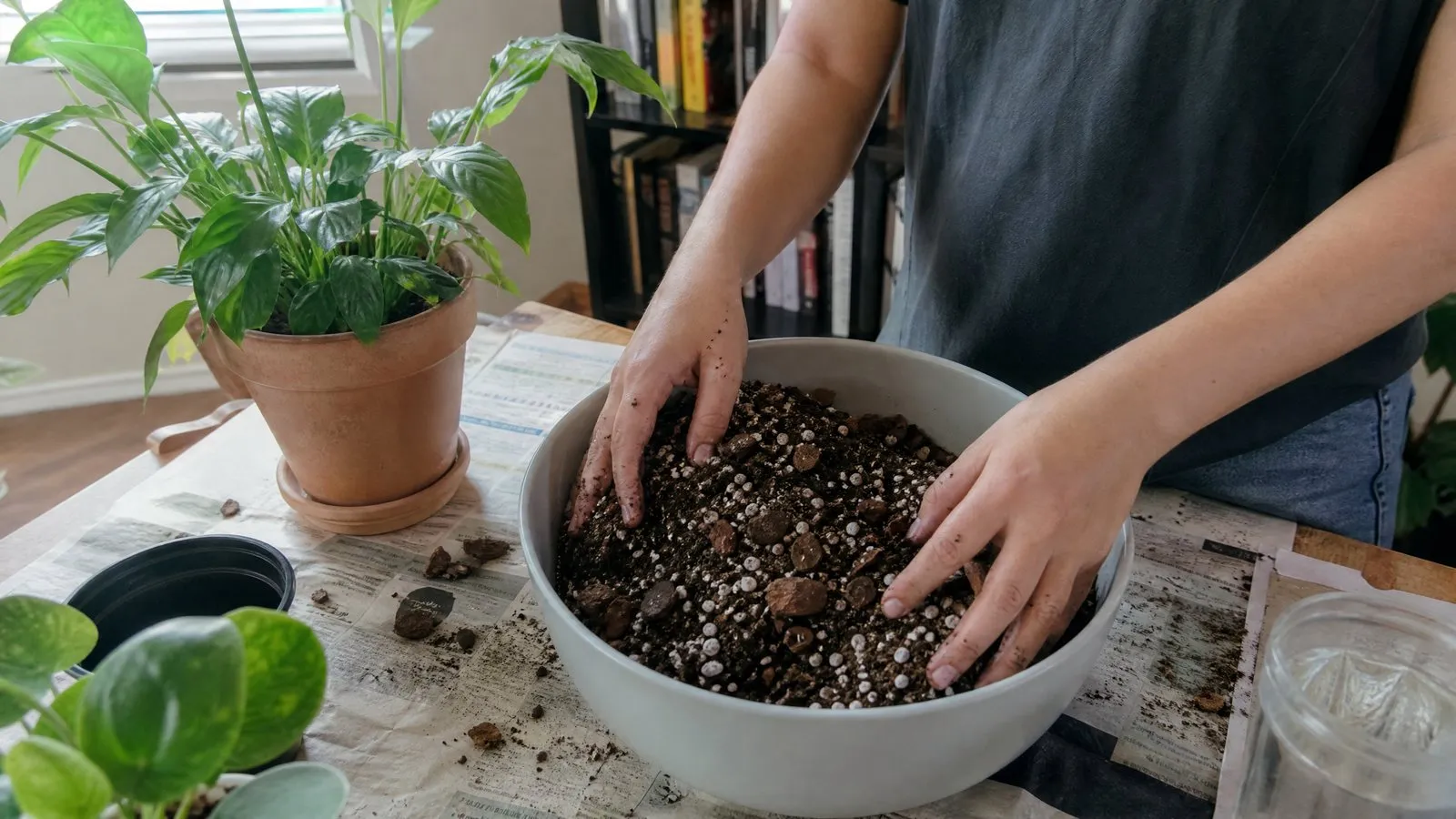
Reach for a bag labeled potting mix or houseplant potting mix, not soil dug from outside and not “garden soil” or “topsoil.” Garden soil compacts into a dense brick in a pot, suffocating roots and holding too much water.
A good houseplant mix is light and fluffy. It usually contains:
- Peat or co: coir to hold some moisture
- Perlite or bark to create air pockets and let water drain through
Most bagged houseplant mixes work fine straight from the bag for leafy tropicals. Two exceptions worth knowing:
- Succulents and cacti want a grittier, faster-draining mix (often labeled “cactus and succulent mix”), or regular mix with extra perlite stirred in.
- Over time all mixes break down, compact and drain poorly. That’s your cue to refresh the soil or repot, usually every 12 to 24 months.
If you want to understand what’s in the bag or mix your own, see potting soil for houseplants. When a plant outgrows its pot or the soil has broken down, how to repot without killing it walks you through it step by step.
One thing soil does not do: feed your plant forever. Fresh mix has enough nutrients for a few months. After that, a diluted liquid fertilizer during the growing season (spring and summer) keeps plants healthy. Don’t rush it, and don’t overdo it, more on timing in how and when to fertilize.
5. Humidity: last on the list for a reason
Humidity matters least for most beginner plants, so don’t stress about it until the first four are sorted. Pothos, snake plants, spider plants and ZZ plants handle normal household air just fine.
That said, some popular plants (calathea, ferns, many tropicals) come from humid rainforests and show it with crispy brown leaf edges when the air is dry, especially in winter when heating kicks in. Average home humidity sits around 30 to 50 percent; those plants prefer 50 percent or higher.
If you have a fussy plant, here’s what actually helps and what doesn’t:
- Works: grouping plants together, a small humidifier, moving the plant to a naturally humid room like a bathroom with a window.
- Barely works: misting. It raises humidity for a few minutes at most and can encourage leaf disease if leaves stay wet.
The full rundown is in how to raise humidity (what works and what doesn’t).
A simple weekly routine
You don’t need to fuss daily. A five-minute weekly check covers almost everything:
- Check the soil on each plant with your finger. Water only the ones that are dry at the depth that plant likes.
- Water thoroughly when needed, let pots drain, and empty saucers.
- Look at the leaves, top and underside. Yellowing, drooping, spots or tiny webs are early warnings.
- Rotate each pot a quarter turn so it grows evenly toward the light.
- Wipe dusty leaves occasionally with a damp cloth so they can soak up light.
During spring and summer, add a diluted fertilizer every 2 to 4 waterings. In fall and winter, most plants slow down: water less and skip feeding.
The most common beginner mistakes
If you avoid these three, you’re ahead of most people:
- Overwatering. The classic killer. Damp soil plus no air equals root rot. Always check before you pour, and when in doubt, wait a day.
- A pot with no drainage hole. A beautiful pot with no hole is a slow death trap. Use a nursery pot inside it, or drill one.
- Too little light. Plants in dark corners stretch, droop and fade. Match the plant to the light you actually have, or add a grow light.
A few more that trip people up: using garden soil, misting instead of fixing real problems, repotting into a huge pot (all that extra soil stays wet and rots roots, go up just 1 to 2 inches in diameter), and panicking at a single yellow leaf. Older leaves naturally yellow and drop; it’s only a problem when it spreads. See why leaves turn yellow if it does.
How to choose your first plant
Start with your light, then pick a plant that matches it. This one decision prevents most beginner heartbreak.
| Your light | Good first plants | Notes |
|---|---|---|
| Low to medium | Snake plant, ZZ plant, pothos | Very forgiving; tolerate missed waterings |
| Medium, indirect | Spider plant, peace lily, heartleaf philodendron | Peace lily droops dramatically when thirsty, then recovers |
| Bright, indirect | Monstera, most herbs | Herbs also want some direct sun |
A couple of starter favorites:
- Pothos trails happily in medium light and tells you when it’s thirsty by softening its leaves.
- Snake plants survive low light and infrequent watering, but are, ironically, easy to overwater, so let them dry out fully.
Want more options? Our list of the 12 easiest houseplants for beginners sorts them by how forgiving they are.
One safety note: if you have cats or dogs, check before you buy. Several common houseplants, including pothos, peace lily and monstera, are toxic if chewed, according to the ASPCA’s toxic plant list. Our guide to houseplants safe for cats and dogs lists safer picks. If a pet eats part of a plant and shows symptoms, call your vet or a pet poison helpline right away.
FAQ
How often should I water my houseplant?
There’s no universal number, which is why calendars fail. Check the soil instead: for most leafy plants, water when the top 1 to 2 inches are dry; for succulents and snake plants, let the pot dry out almost completely. In practice that’s often every 5 to 14 days, depending on light, warmth and season.
Do I really need a pot with a drainage hole?
Yes, especially as a beginner. Without one, water pools at the bottom and rots the roots. If you love a pot that has no hole, keep the plant in a plastic nursery pot with holes and set that inside the decorative one, lifting it out to water.
Why are my plant’s leaves turning yellow?
The most common cause is overwatering, often paired with soggy soil and no drainage. But a single lower leaf yellowing and dropping is normal aging. Check the soil moisture and the drainage first, and see our dedicated guide on yellowing leaves if it keeps spreading.
Can I keep plants alive in a room with no windows?
Not with natural light alone, plants need light to live. In a windowless room you’ll need a grow light running around 8 to 12 hours a day. With one, even light-hungry plants can thrive; without one, no plant will last long.
What’s the easiest plant for someone who’s killed plants before?
A snake plant or ZZ plant. Both tolerate low light and long gaps between watering, which forgives the most common beginner mistakes. Just resist the urge to water often, let the soil dry out fully between drinks.